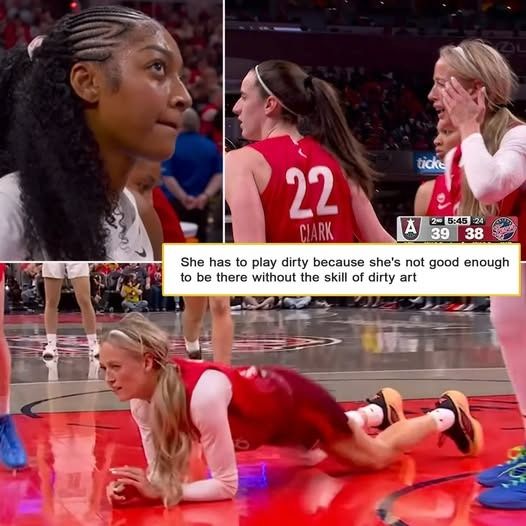
Caitlin Clark & Sophie Cunningham GO NUCLEAR On Brittney Griner After Caitlin Clark ATTACK!
Powered by
GliaStudios
Caitlin Clark & Sophie Cunningham Go Nuclear on Brittney Griner After Heated On-Court Incident Rocks WNBA Fans
Tensions are boiling over in the WNBA, and the latest controversy has fans debating everything from physical play to player protection.
Following a hard-fought matchup that featured several heated moments, emotions reached a breaking point as Indiana Fever stars Caitlin Clark and Sophie Cunningham appeared visibly frustrated after a sequence involving Atlanta Dream center Brittney Griner.
The intensity of the game immediately sent social media into overdrive.
Fans flooded X and Instagram with clips and reactions, with many arguing that Clark continues to absorb excessive physical contact without receiving enough protection from officials. Others defended Griner, insisting that tough, physical basketball has always been part of the game.
But one thing became clear: nobody was talking about anything else.
Another Physical Night for Caitlin Clark
Ever since entering the WNBA, Caitlin Clark has found herself at the center of nearly every major storyline.
From sold-out arenas and record-breaking television ratings to fierce rivalries and constant scrutiny, the Fever superstar has become one of the most talked-about athletes in the world.
With that spotlight has come increased physical attention from opponents.
And during the latest contest, fans believed Clark once again took the brunt of that physicality.
Following one particularly controversial sequence involving Brittney Griner, cameras caught Clark and teammate Sophie Cunningham expressing visible frustration.
The reactions were enough to ignite a firestorm online.
Sophie Cunningham Doesn’t Hide Her Emotions
If there is one player who has built a reputation for defending teammates, it is Sophie Cunningham.
The veteran guard has never been afraid to speak her mind or stand up for those around her.
Throughout the game, Cunningham appeared increasingly animated as the physical nature of the contest escalated.
Television cameras repeatedly showed her communicating with referees and reacting to several calls that left Fever fans furious.
Social media users quickly praised Cunningham for having Clark’s back.
“Sophie is the enforcer every team needs.”
“She’s protecting her superstar.”
“That’s what teammates are supposed to do.”
Others, however, warned that emotions can easily spill over in high-stakes situations.
Fans Split Over Brittney Griner’s Style
Brittney Griner has spent more than a decade establishing herself as one of the most dominant and intimidating players in women’s basketball.
Her physical presence around the basket has always been a defining part of her game.
Supporters argue that Griner simply plays with strength and intensity.
Critics, meanwhile, claim certain moments cross the line.
As clips circulated online, debate intensified across basketball communities.
Was it simply hard-nosed basketball?
Or had emotions gone too far?
As expected, opinions varied dramatically.
## Caitlin Clark Continues to Draw Attention
Regardless of where fans stand, one thing remains undeniable.
Everything involving Caitlin Clark becomes a headline.
Every hard foul.
Every rivalry.
Every emotional reaction.
Every controversial call.
The Fever guard has become the face of countless debates surrounding officiating, player safety, and the evolution of the WNBA.
And with each new chapter, interest in the league continues to grow.
Television ratings climb.
Arenas sell out.
Social media explodes.
Love her or criticize her, Clark’s presence guarantees attention.
Rivalries Fueling the League
Basketball has always thrived on emotion.
From Magic Johnson and Larry Bird to Diana Taurasi and Sue Bird, rivalries and fiery moments have shaped generations of fans.
Today’s WNBA is no different.
Players compete with passion.
Tempers flare.
And fans passionately defend their favorite stars.
The latest incident involving Clark, Cunningham, and Griner only added another layer to an already captivating season.
While opinions remain divided, one thing is certain:
The basketball world will be watching closely the next time these stars share the court.
Because whenever emotions run high and competitors refuse to back down, fireworks are never far away.
And in today’s WNBA, every game feels bigger than the last.
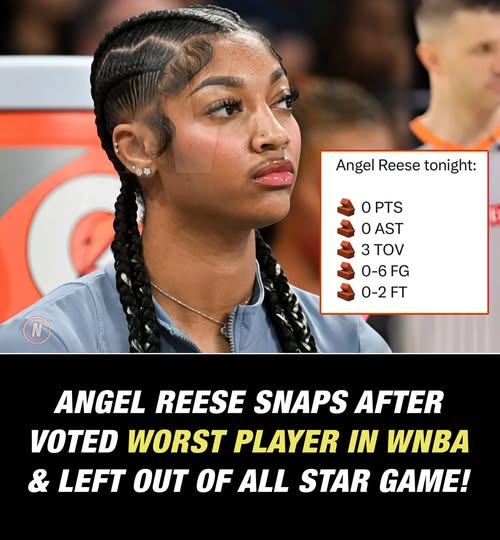
Monica McNutt doesn’t hold back, demands a re-rank: “If Angel Reese was white, she would clearly have the most votes.” Angel is ranked 13th in All-Star voting despite the headlines, stats, and win
The WNBA All-Star fan vote results have sparked plenty of conversation — and not just because rookie sensation Caitlin Clark is dominating the leaderboard with a staggering **515,993 votes**, the most by far.
The bigger question swirling around basketball circles is whether Chicago Sky star Angel Reese deserves a higher spot than her current **13th place**, where she’s sitting with **173,363 votes**.
Reese’s rookie season has been nothing short of headline-worthy. She’s posted double-doubles at a historic pace, broken records for consecutive double-doubles by a rookie, and established herself as one of the league’s top rebounders.
Beyond the stat sheet, she’s become a force on defense, a vocal leader in the locker room, and a cultural icon who continues to draw media attention.
So why isn’t that translating to more All-Star votes?
Some argue it’s a matter of timing and popularity. Clark’s college legacy and immediate offensive fireworks have drawn a massive fan base, translating into runaway voting numbers.
Reese, while equally impactful in her own way, plays a grittier, less highlight-friendly style that doesn’t always rack up viral clips — even if it racks up wins.
Others point to market size and media coverage. Reese is in Chicago, a big market but one that hasn’t captured the same national attention as Indiana’s Clark-driven frenzy.
In a fan-vote-heavy format, storylines and exposure matter just as much as box scores.
Still, numbers don’t lie — and Reese’s season has the numbers of a top-tier All-Star. She’s not just holding her own as a rookie; she’s reshaping the Sky’s identity.
Whether or not her vote count catches up to her impact, her first-year résumé makes a strong case that she belongs higher on the list.
At the end of the day, All-Star games are about more than stats — they’re about the players fans want to see. The question is, will fans start to realize that what Angel Reese has accomplished this season deserves not just applause, but a prime spot in the All-Star spotlight?
If you want, I can also make a **spicier opinion-piece version** that openly calls out the voting bias and plays up the rivalry with Caitlin Clark. That would get more reaction online.
Seattle Storm player Lexie Brown spoke about how the WNBA has changed since Caitlin Clark’s debut in 2024.
Atlanta Dream star Angel Reese was seen singing the Black National Anthem “Lift Every Voice and Sing” at the home of Caitlin Clark and Indiana Fever earlier on Thursday, just ahead of Juneteenth.
Reese addressed the singing after her team beat the Fever for the second straight game on Saturday, referencing how the Fever fans booed her in Indiana two days earlier.
Caitlin Clark of the Indiana Fever drives to the basket against Angel Reese of the Atlanta Dream during the second quarter at State Farm Arena in Atlanta, Georgia, on June 20, 2026. (Colin Hubbard/Getty Images)
“It was just one in the moment of where I was, and how it felt, and how it hit, and the things that I’ve had to experience the last couple years, and they haven’t always been great,” Reese told reporters Saturday.
“It’s not supposed to be easy, but I am very, very grateful for this opportunity to be a Black woman, it’s a privilege… being where I was, hearing the loud boos when I was in the arena, and then when I heard ‘Lift Every Voice,’ it just made me feel like, this is for the ones that walked for me.”
Reese also answered a question about representing “Black culture” in Atlanta.
“Those young girls, those young boys out there, when they see a Black girl being able to run up and down the court and just have this life and have this experience, I think it’s really important. Representation is important, for me to use my voice, for me to use my platform, I’ll never stay silent for things I believe in,” Reese said.
“Lift Every Voice and Sing” is often referred to as the Black National Anthem. The NAACP says the hymn began as a poem written in 1900 by James Weldon Johnson, with music composed by his brother, John Rosamond Johnson. A choir of 500 schoolchildren first performed it publicly in Jacksonville, Florida, for a celebration of Abraham Lincoln’s birthday.
The song has also been part of WNBA Juneteenth programming in recent years. The NBA said in 2021 that WNBA teams would play “Lift Every Voice and Sing” in arenas during Juneteenth celebrations, alongside other league social justice initiatives.
Reese has previously accused Clark’s fans of “racism” during the first episode of Reese’s podcast in September 2024.
“I think it’s really just the fans, her fans, the Iowa fans, now the Indiana fans, that are really just, they ride for her, and I respect that, respectfully. But sometimes it’s very disrespectful. I think there’s a lot of racism when it comes to it,” Reese said.
Caitlin Clark of the Indiana Fever shoots against Angel Reese of the Atlanta Dream during the first quarter at State Farm Arena in Atlanta, Georgia, on June 20, 2026. (Colin Hubbard/Getty Images)
“Multiple occasions, people have made AI-images of me naked. They have sent it to my family members. My family members are like uncles, sending it to me like, ‘Are you naked on Instagram?’”
In May of last year, after the Fever and Reese’s old team, the Chicago Sky, faced off in the first game of the season in Indiana, the WNBA launched a probe into alleged racist behavior by Fever fans, but the league found no evidence. Still, Reese seemed to acknowledge the allegations anyway after the game.
“Obviously, there’s no place in this league for that,” Reese said at that time. “I think the WNBA and our team and our organization has done a great job supporting me. … Going through this whole process, if it can happen to me, it can happen to anyone.”
Now, Reese’s latest comments come during a high-profile week for Reese, Clark and the WNBA, as two of the league’s most-watched players met twice in three days.
Atlanta defeated Indiana 108-101 at Gainbridge Fieldhouse on Thursday, with Reese posting 21 points and 11 rebounds and Clark scoring 26 points in the loss. The Dream followed with a 113-96 win over the Fever at State Farm Arena in Atlanta on Saturday, a game in which Clark again led Indiana with 26 points.
Saturday’s win also gave Reese a league milestone. The 6-foot-4 forward became the fastest player in WNBA history to reach 1,000 career rebounds, doing so in her 79th game, 10 games faster than Tina Charles. Reese finished the game with 18 points and eight rebounds as Atlanta improved to 11-4 and Indiana dropped to 9-7.
Atlanta Dream forward Angel Reese leaves the game during the first quarter against the Las Vegas Aces at State Farm Arena in Atlanta, Ga., on May 17, 2026. (Brett Davis/Imagn Images)
The Dream acquired Reese from the Chicago Sky in April in exchange for Atlanta’s first-round picks in 2027 and 2028. The trade brought the two-time WNBA All-Star and 2023 national champion to an Atlanta team coming off what the franchise called a historic 2025 season.
Reese and Clark have been linked since their college careers, most notably after LSU defeated Iowa 102-85 in the 2023 NCAA women’s basketball championship game. That matchup drew 9.9 million viewers, then the most-watched women’s college basketball game on record.
MAJOR ENVY Hits WNBA As Caitlin Clark OWNS INDY 500 & MEMORIAL DAY!
MAJOR ENVY Hits the WNBA as Caitlin Clark Owns the Indy 500 and Memorial Day Weekend
There are stars.
There are superstars.
And then there are cultural phenomena.
Over Memorial Day weekend, Caitlin Clark once again proved that she belongs in a category all her own.
As hundreds of thousands of fans poured into Indianapolis for the legendary Indy 500, one name seemed to dominate the city nearly as much as the iconic race itself: Caitlin Clark.
And not everyone around the WNBA is happy about it.
From sold-out Fever games to unprecedented media attention, Clark’s influence has transformed Indianapolis into the epicenter of women’s basketball. But Memorial Day weekend served as perhaps the clearest reminder yet that the rookie sensation has become something much bigger than basketball.
She has become a cultural force.
## The Face of Indianapolis
The Indianapolis 500 has always been one of America’s biggest sporting events.
Generations of racing fans have made the trip to the Brickyard, creating an atmosphere unlike anything else in sports.
Yet this year, something felt different.
Caitlin Clark’s presence was everywhere.
Fans lined up for photos.
Merchandise featuring the Indiana Fever star filled stores.
Media outlets covering the race couldn’t stop talking about her impact on the city.
And when Clark appeared at the Speedway, the reaction was immediate.
Thousands erupted.
Cameras followed her every move.
Social media exploded.
It was a reminder that Indianapolis no longer belongs solely to racing in late May.
The city now has another queen.
A Level of Stardom Rarely Seen
For decades, WNBA stars have fought for attention.
Legends like Lisa Leslie, Diana Taurasi, Sue Bird, and Candace Parker helped build the league, but few players have ever generated attention at the level Clark commands today.
Television ratings are soaring.
Attendance records are falling.
Road games have become major events.
Opposing teams are moving games to larger arenas simply because Clark is coming to town.
And perhaps most remarkably, people who have never watched a WNBA game are tuning in.
That kind of impact is rare.
Very rare.
Envy Is Inevitable
Success always attracts criticism.
And Clark’s meteoric rise has brought plenty of it.
Every foul becomes a debate.
Every missed shot becomes national news.
Every accomplishment sparks controversy.
Some critics have argued that the attention surrounding Clark overshadows other stars.
Others believe the league’s coverage has become too centered around one player.
But numbers don’t lie.
Television ratings have skyrocketed.
Ticket demand has exploded.
Corporate sponsors are investing more heavily.
And social media engagement has reached levels previously unimaginable.
Whether people love her or resent the spotlight she commands, one fact remains impossible to ignore:
Caitlin Clark moves the needle.
Memorial Day Belonged to Clark
Traditionally, Memorial Day weekend belongs to the Indy 500.
But this year, Clark’s influence was impossible to escape.
National broadcasts featured her.
Sports networks discussed her.
Fans wearing Fever jerseys mixed with race fans across Indianapolis.
The city embraced its newest superstar.
And perhaps that’s what makes some people uncomfortable.
Because very few athletes have ever managed to transcend their sport so quickly.
Clark isn’t just representing the Fever.
She isn’t just representing the WNBA.
She’s becoming one of the most recognizable faces in American sports.
Bigger Than Basketball
What makes Clark’s rise so extraordinary isn’t just the statistics.
It’s the connection.
Young girls see themselves in her.
Families are attending games together.
Casual fans are becoming diehards.
And corporations are recognizing her value.
She has become the centerpiece of a movement that stretches far beyond the court.
The WNBA is experiencing unprecedented growth.
And whether critics want to admit it or not, Caitlin Clark sits at the center of that explosion.
A New Era
Jealousy is nothing new in sports.
Whenever one player reaches another level of fame, debates inevitably follow.
Michael Jordan dealt with it.
Tiger Woods dealt with it.
LeBron James dealt with it.
And now Caitlin Clark is experiencing it.
But greatness often brings discomfort.
Because greatness changes expectations.
Greatness changes economics.
And greatness changes history.
As Memorial Day weekend came to a close, one thing became abundantly clear.
The Indy 500 remains a legendary tradition.
But Indianapolis has another attraction now.
Another icon.
Another phenomenon.
And her name is Caitlin Clark.
Love it or hate it, she owns the spotlight.
And right now, the rest of the WNBA is simply trying to keep up.
Elira stood near the fence again, keeping a safe distance as she faced the place that once filled her with fear. The fear was still there, but this time it no longer controlled he…Continue Reading
After the accident, her life did not return exactly to how it had been before. Instead, she became more patient and more aware of small victories, like walking without pain, breathing calmly, and enjoying simple moments without panic.
Her experience taught her that healing is not only physical. Emotional wounds need care too, and recovery often happens slowly, through courage, support, and learning to trust life again.
Eventually, Elira began volunteering at the hospital where she had once been a patient. By listening to others and offering comfort, she discovered a deeper kind of strength — the kind that comes from surviving pain and helping others believe they can survive too.
While Little House on the Prairie may be remembered as a picture-perfect portrayal of pioneer life, it wasn’t without its fair share of unexpected hiccups. The show’s charm and heartwarming lessons about family, love, and resilience made it a beloved classic, but beneath its polished exterior lay a treasure trove of bloopers, anachronisms, and behind-the-scenes quirks that fans can’t help but laugh at today.
For decades, Little House on the Prairie has transported audiences back to the 19th century, introducing them to the Ingalls family and their small, tight-knit community in Walnut Grove. Watching reruns today feels like stepping into a simpler time, with timeless morals about treating others with kindness and valuing the bonds of family and friendship. However, with a modern eye, it’s clear that not everything in Walnut Grove was as seamless as it seemed.
Let’s take a closer look at the fascinating mistakes, quirks, and unexpected moments that have kept fans entertained and intrigued long after the show’s final farewell.
Laura’s Never-Ending Pregnancy
Laura Ingalls’ pregnancy was a joyful storyline introduced in season seven during the blooming warmth of spring. But as the show progressed, it seemed like Laura’s pregnancy lasted far longer than the typical nine months. By the following summer, she was still visibly expecting, prompting fans to wonder whether the show’s timeline—or biology—had gone completely haywire.
Advertisements
This storyline slip is a classic case of continuity errors, where the writers and production team failed to align timelines, leaving Laura in an inexplicably long maternity limbo.
Nellie Oleson, the show’s delightfully conniving troublemaker, was brought to life by Alison Arngrim. Nellie’s mischievous antics made her a standout character, but her trademark blonde ringlets weren’t exactly natural. Arngrim’s real hair was transformed using a curling iron heated in an oven—a labor-intensive and uncomfortable process.
Eventually, production opted for a wig, held in place with a hefty metal comb and hairpins. This decision spared Alison from hours of styling, but for viewers, Nellie’s curls became a memorable part of her over-the-top personality.
Colonel Sanders Travels Through Time
One of the show’s most bizarre bloopers occurred in the season eight episode “Wave of the Future,” in which Nellie’s restaurant is turned into a franchise. As the storyline unfolds, none other than Colonel Sanders—the founder of Kentucky Fried Chicken—makes an appearance, offering Harriet Oleson a deal to start her own chicken franchise.
While hilarious, this cameo was anachronistic, as Colonel Sanders wasn’t born until 1890, and KFC didn’t emerge until 1952. Given that Little House is set in the 1870s and 1880s, the Colonel’s presence is a comedic but glaring error.
Adding to the hilarity, rumor has it that the fried chicken served on the show often came straight from KFC itself.
The Mystery of Missing Coats
In the Christmas episode “Bless All the Dear Children,” Laura’s baby is kidnapped in freezing Minneapolis during the holiday season. Strangely, characters walk around without coats or any visible discomfort, despite the city’s notoriously frigid December weather.
This oversight can likely be attributed to the show being filmed in Tucson, Arizona, during the summer months. The blazing heat of the set clashed with the need for cold-weather realism.
Caroline’s 20th-Century Bra
Eagle-eyed viewers have noticed a particularly amusing wardrobe malfunction: glimpses of Caroline Ingalls’ bra. The show is set in the 1870s and 1880s, but bras weren’t invented until 1912, making this an amusing anachronism.
Similarly, many of the women’s hairstyles featured perms and curls that were more reminiscent of the 1970s than the 19th century. And while most of the men sported clean-shaven looks, historical records reveal that beards were all the rage during the time period.
A Dummy’s Big Moment
In the season five episode “The Odyssey,” an intense scene shows an assailant attempting to throw Albert off a moving train. Laura heroically saves him, but observant fans noticed something odd: a dummy was used in place of Albert during the struggle, and its lifeless body landed awkwardly on the grass. Meanwhile, a stuntman dramatically rolled down the hill moments later, creating an unintentionally hilarious visual contrast.
Pranks Galore: Michael Landon’s Frogs
Michael Landon, the show’s star and producer, was known for his playful personality and frequent on-set pranks. According to Rachel Greenbush, who played Carrie Ingalls, Landon loved surprising cast members with frogs.
After catching frogs during breaks, Landon would place them in his mouth and approach unsuspecting crew members. He’d then open his mouth, releasing the frogs to jump out and startle everyone nearby. This mischievous humor added a sense of fun to long filming days.
Melissa Gilbert’s Rift with Michael Landon
Though the cast often felt like a real family, tensions occasionally bubbled to the surface. Melissa Gilbert, who played Laura Ingalls, once had a falling out with Michael Landon after discovering his affair with the show’s makeup artist, Cindy Clerico.
Landon’s infidelity shocked the cast, who had viewed him as a father figure. Gilbert later admitted that learning about the affair shattered her perception of him, though she ultimately came to terms with the complexities of his character.
Albert’s Mysterious Fate
Albert Ingalls, played by Matthew Labyorteaux, became a fan favorite after being adopted by the Ingalls family. However, his storyline took a tragic turn in the 1983 TV movie Little House: Look Back to Yesterday, where he was diagnosed with leukemia. The show never explicitly confirmed his fate, leaving fans to speculate for decades.
Katherine MacGregor’s Pilgrimage
Katherine MacGregor, who played the iconic Harriet Oleson, was notably absent from the show’s finale, The Last Farewell. Reports suggest she was on a pilgrimage to India, exploring her Hindu faith. However, other sources claim her absence stemmed from a long-standing dispute with Michael Landon over salary and creative differences.
The Traveling Quilt
The same white quilt with a double wedding ring pattern appears on multiple beds throughout the series. This clever reuse of props might have saved time and money, but it’s a detail that hasn’t escaped fans’ sharp eyes.
The gavel fell with a thunderous finality, echoing through the hollow chambers of the courtroom like a death knell for a future that had barely begun. When the judge uttered the words “four hundred and fifty-two years,” the air vanished from the room, replaced by a suffocating, heavy silence that pressed against the chests of everyone present. A teenager stood before the bench, his face a mask of youthful vulnerability stripped bare by the cold, unyielding mechanics of the law. It was a punishment that defied the very concept of human mortality, a sentence so extreme it transformed a boy into a ghost.
The case had gripped the public imagination from the very first day, escalating from a local tragedy into a national obsession. Inside the courtroom, the atmosphere was thick with the visceral, competing realities of justice. On one side sat the families of the victims, their lives fractured into unrecognizable pieces by the defendant’s actions. For them, every year of that staggering sentence was a necessary stone in the wall of accountability. They spoke of stolen futures, of empty chairs at dinner tables, and of a grief so deep it had become a permanent part of their anatomy. For these families, the verdict wasn’t just a legal outcome; it was the only possible response to a nightmare from which they could never wake.
However, the defense painted a starkly different portrait of the boy. They spoke of a youth sculpted by brutal circumstances, of a mind still in the volatile, unpredictable stages of development, and of a capacity for redemption that the court had seemingly chosen to ignore. They argued that by locking a teenager away for nearly half a millennium, society wasn’t seeking justice—it was performing a ritual of permanent exclusion. They challenged the room to see past the gravity of the crimes and recognize the terrifying finality of a system that views a human being as a static object, incapable of change, growth, or eventual transformation.
As the judge delivered the sentence, the weight of the moment felt almost metaphysical. It was as if the law were trying to reach into the future, centuries ahead, to place a lock on a life that would be long forgotten by history. The onlookers were left to grapple with an unsettling question: what is the purpose of a prison term that outlasts the lifespan of a civilization, let alone a man? Is it a genuine instrument of retribution, or is it an admission of our own inability to reconcile the complexity of human morality with the rigid, binary nature of our judicial institutions?
Advertisements
The debate spilled out into the streets, the internet, and the news cycle, igniting a fierce, polarized struggle over the soul of the justice system. Proponents of the sentence argued that the severity of the offenses demanded a response that would echo through time, a deterrent so absolute that it served as a monument to the sanctity of the law. They contended that there are acts so heinous they effectively forfeit a person’s right to participate in the future. To them, the number of years was irrelevant; the point was the total removal of the threat, the finality of the closure, and the unyielding moral stance of a society that refuses to compromise when faced with ultimate tragedy.
Yet, a growing chorus of voices challenged the humanity of such an outcome. They questioned the ethics of stripping a teenager of the chance to ever exist outside of concrete walls. If a person is fundamentally shaped by their environment and their choices, what does it say about us if we insist that their childhood mistakes should define the entirety of their existence? They pointed to the neurobiology of the adolescent brain—its impulsivity, its lack of foresight, and its profound plasticity. By imposing a sentence of 452 years, the court wasn’t just punishing a crime; it was executing a sentence of total social death, ensuring that the boy who entered the system would never have the opportunity to become a man who could repent, contribute, or even understand the person he had once been.
This case forced a nation to confront the uncomfortable intersection of trauma, culpability, and the elusive nature of forgiveness. It raised a mirror to our own collective conscience, asking us to define what justice actually looks like. Is it found in the cold, mathematical precision of compounding sentences, or is it found in the messy, difficult, and often frustrating work of rehabilitation? The verdict became a lightning rod for these broader societal anxieties. It highlighted the terrifying ease with which we can write off an entire life, turning a person into a statistic to be filed away in the archives of state-sanctioned vengeance.
In the end, the courtroom doors closed, but the questions remained hanging in the air, unmoored and unresolved. This teenager’s life became a case study in the limits of our empathy and the harshness of our laws. Whether we view the sentence as a triumph of absolute justice or a tragic failure of human imagination, it serves as an enduring reminder of how quickly a single chapter of pain can be weaponized to silence a story. One life, one moment, and one verdict have become the focal point of a debate that challenges us to decide if we are a society that builds fences to keep the “bad” out, or if we are a society that builds bridges to bring the broken back to themselves. As the years begin to tick by, the world outside will keep turning, but for the boy at the center of it all, time has stopped, leaving us to wonder if justice was truly served or if we have merely surrendered to a darker, more primitive impulse of our own design.
By 6:18 that Tuesday evening, winter had already wrapped itself around our quiet cul-de-sac. Porch lights glowed through the cold blue air, and the little plastic snowman two houses away leaned in the wind.
Inside my kitchen, everything felt warm and familiar. Chicken was heating in the oven, lemon cleaner still scented the counters, and a chocolate silk pie cooled on the stove because my grandchildren still believed Christmas should taste like my house.
Then Tiffany walked in.
She did not enter like a guest. She came in like someone who had already decided my home partly belonged to her.
I looked at her. “Getting ready for what?”
She sat at my kitchen counter and began naming people. Her sister. Her sister’s children. An uncle. Cousins. A niece. Two friends who “had nowhere warm to go.”
Then she smiled.
“My whole family is having Christmas here,” she said. “It’s only twenty-five people.”
Only.
That single word told me everything.
Twenty-five people meant three turkeys, endless dishes, extra chairs, crowded counters, children running everywhere, and me hidden in the background with a serving spoon in my hand while Tiffany smiled for photos.
For five years, I had been the woman behind the clean table. I cooked, cleaned, remembered allergies, bought napkins, made coffee, washed dishes, and kept peace.
At first, I did it out of love.
But somewhere along the way, my kindness had become an expectation.
So I folded the dish towel in my hands and said quietly, “You didn’t ask me. You announced it. So you host.”
Tiffany’s smile faded.
“Kevin won’t allow this,” she said.
I almost laughed.
This was my house. I had paid the mortgage for over thirty years. I had buried my husband, raised my children, fixed problems no one saw, and built a home my grandchildren loved.
And now this woman was standing in my kitchen, telling me my son had to approve my refusal.
Before I could answer, Kevin came in from work.
Tiffany rushed to him immediately.
“Your mother is refusing to help,” she said.
Kevin rubbed his forehead. “Mom. It’s the holidays.”
I looked at him and said, “I’m not refusing Christmas. I’m refusing to be volunteered.”
Tiffany crossed her arms. “We can’t afford catering. Everything is booked. I already told everyone it was handled.”
Then Kevin looked away.
“The apartment deposit wiped out our savings,” he muttered.
Apartment deposit?
No one had told me anything about a new apartment. Yet somehow, I had been silently assigned the job of fixing the problem.
I looked at both of them.
“Then you should not have invited twenty-five people to someone else’s home.”
No one spoke.
Finally, Tiffany said coldly, “Fine. We’ll see.”
That night, after they went upstairs, I cleaned the kitchen, covered the pie, turned off the oven, and opened my laptop.
Then I pulled out the blue folder I had been keeping for three weeks.
PART 2
The folder had not started as suspicion.
It had started with small things that did not make sense.
Kevin had mentioned money problems several times. He said things were tight, savings were low, but manageable. That alone would not have worried me.
But Tiffany’s behavior did not match Kevin’s words.
She was spending, planning, inviting, and speaking as if something much larger had already been decided.
So I began paying attention.
Inside the folder were bank printouts, forwarded emails, a leasing office receipt, and public county records.
One email had Tiffany’s sister Valyria copied on it.
Another mentioned a real estate contact named Marco.
One message included my address and described my home as a “likely future family residence” after the holidays.
Not Tiffany’s house.
Mine.
I stared at those papers for a long time.
This was not Christmas planning.
This was a takeover dressed up as a family gathering.
At 11:12 that night, I sat at my kitchen table and began attaching the documents to an email. One by one, the files uploaded.
Then the floor creaked behind me.
“Mom?”
Kevin stood in the hallway, staring at my screen.
“What is all that?” he asked.
Tiffany appeared behind him, her eyes suddenly sharp.
Before I answered, my printer woke up. One page slid out. Then another.
Kevin picked up the first sheet.
It was the email with Marco copied on it. My address was right there, highlighted.
Kevin read it once.
Then again.
Tiffany quickly said, “That’s not what it means.”
Kevin picked up another page. Valyria’s name was on it.
“Why is your sister involved?” he asked.
“She was helping me plan Christmas,” Tiffany said.
“With Marco?”
Tiffany had no answer.
I stayed silent. That was the hardest part. I let the papers speak for me.
Paper cannot be called emotional. Paper cannot be accused of overreacting.
Then Tiffany tried the tactic I knew was coming.
“Kevin, this is what she does,” she said. “She creates drama so everyone has to manage her feelings.”
I looked at my son.
For five years, I had watched that strategy work on him. Whenever evidence appeared, Tiffany attacked the person holding it.
But this time, Kevin kept reading.
“Were you trying to move us into this house?” he asked.
Tiffany hesitated.
“Eventually, yes,” she admitted. “Your mother lives alone in a big house. We have children. It makes sense.”
I stood up.
“Tiffany,” I said, “you are not hosting Christmas here. Your family is not coming here. And you will not use my kitchen, my table, or my late husband’s home as the background for your plan.”
Her face turned red.
“You can’t ban my family from Kevin’s childhood home.”
“I can,” I said. “Because it is my home.”
Then Kevin picked up the leasing receipt.
His face changed.
“Tiffany,” he said slowly, “this deposit is not for the apartment we looked at together.”
For the first time that night, Tiffany looked afraid.
Kevin turned the paper toward her.
“What unit is this for?”
She said nothing.
I opened the folder to the final email and handed it to him.
He read the names.
Valyria.
Alejandro.
Marco.
Tiffany.
Then he sat down like his legs could no longer hold him.
PART 3
Tiffany reached for Kevin’s arm.
He pulled away.
Quietly.
That small movement said everything.
She started speaking fast. She said they were going to explain. Nothing was final. Marco was only helping. It was just planning.
But Kevin was no longer listening.
He was looking at the evidence like a man realizing the past year had not been what he thought it was.
Then Tiffany turned on me.
“She is doing this on purpose,” she said. “She wants you against me.”
I walked to the sink, picked up Kevin’s cold coffee cup, and poured it out.
For years, I had cleaned up after everyone without making them notice.
This time, Kevin noticed.
“I wanted to make pie for my grandchildren,” I said. “You made me prepare evidence instead.”
Then Tiffany’s phone buzzed.
Once.
Twice.
Three times.
Kevin looked at it.
“Who is texting you?”
She shook her head, but he turned the phone over.
A message preview from Valyria appeared on the screen.
Did she agree yet? Marco needs the final answer before Friday.
Everyone in the kitchen saw it.
Tiffany closed her eyes.
Kevin stepped back from her.
Not dramatically. Not angrily.
Just enough distance to show that something had finally broken.
Then he looked at me.
“Mom,” he said, his voice cracking. “I’m sorry.”
I had waited a long time for those words.
They did not feel like victory.
They felt like setting down a heavy thing I had carried alone for years.
Tiffany gave a bitter laugh.
“So that’s it? One folder and suddenly I’m the villain?”
I looked at the papers on my kitchen table.
“One folder didn’t make you anything,” I said. “It only stopped you from pretending.”
Kevin picked up the email with Marco’s name and folded it carefully.
“Christmas is canceled here,” he said.
Tiffany stared at him.
“No,” he repeated.
It was the first real no I had heard him say to her in five years.
She turned to me one last time.
“You’re going to regret this.”
I thought of my pie, my kitchen, my husband’s crooked flag magnet on the fridge, and every holiday I had spent washing dishes while others mistook my silence for permission.
“Maybe,” I said. “But I won’t be cleaning up after it.”
By morning, all twenty-five guests were told Christmas would not be at my house. Kevin sent the message himself.
Plans have changed. Mom was never asked before her home was offered. We are handling this privately.
Tiffany’s family reacted exactly as expected. Calls. Angry messages. Accusations.
But Marco said nothing.
That silence told me enough.
Kevin and Tiffany moved out on December twenty-third. He carried the bags himself.
That Christmas, my house was quiet.
Eight people.
No extra chairs.
No third turkey.
No strangers treating my home like a venue.
My grandchildren came two days later. Kevin carried plates, washed forks, and did not wait for me to ask.
The youngest pointed at the little flag magnet on the refrigerator.
“Why is it crooked?”
“Your grandpa put it there,” I said.
“Then leave it,” he replied.
So I did.
For years, I had become invisible one small moment at a time.
One swallowed insult.
One ignored dish.
One holiday spent serving people who never saw me.
But that night, I became visible again in small ways too.
One printed page.
One blue folder.
One clear no.
Because a home is not proven by who expects to inherit it.
It is proven by who respects the person standing inside it.
And for the first time in years, no one in my house mistook my silence for permission.
A recent decision from a federal appeals court has renewed national discussion about military policy, constitutional protections, and the role of the judiciary in reviewing executive actions. The ruling focused on portions of a policy affecting transgender individuals in military service, with judges examining whether certain restrictions were consistent with constitutional principles and longstanding legal standards.
Appeal process guide
The case attracted attention because it touches on several important issues at once: military readiness, equal protection under the law, executive authority, and the rights of individuals who wish to serve their country. While opinions on these subjects vary widely across the political spectrum, the court’s decision highlights how the legal system continues to serve as a forum for resolving complex policy disputes.
In a divided 2–1 ruling, the appeals court concluded that some provisions of the policy could not withstand constitutional scrutiny. The majority opinion found that certain restrictions appeared to unfairly target a specific group without sufficient justification. At the same time, the court allowed other portions of the policy to remain in effect while legal challenges continue, demonstrating the nuanced nature of the decision.
The ruling does not end the broader debate. Instead, it represents another chapter in a legal and political conversation that has unfolded across multiple administrations, numerous courtrooms, and various levels of government. As policymakers, military leaders, advocacy organizations, and legal scholars evaluate the decision, questions remain about what it may mean for future military regulations and constitutional challenges.
Understanding the Background of the Policy
Military service in the United States has long involved eligibility standards related to health, fitness, conduct, and operational readiness. Throughout history, these standards have evolved as social norms, medical knowledge, and military needs have changed. Policies that once seemed permanent have often been revised or replaced as circumstances shifted.
Policy analysis reports
The transgender military policy at the center of this case emerged during a period of significant national discussion regarding military inclusion. Different administrations adopted differing approaches to the issue, reflecting broader political disagreements about how military personnel policies should be structured.
Supporters of restrictions argued that military leaders must maintain standards designed to promote readiness, deployability, and mission effectiveness. They maintained that the armed forces require unique rules that may differ from standards applied in civilian life because military operations involve extraordinary responsibilities and risks.
Critics of the restrictions, however, argued that qualified individuals should not be excluded from service based on characteristics unrelated to their ability to perform military duties. They contended that broad restrictions could prevent capable service members from contributing their skills and experience to the armed forces.
These competing viewpoints eventually led to multiple legal challenges, with courts asked to determine whether the policies complied with constitutional requirements and established legal principles.
The Appeals Court’s Decision
The recent appeals court ruling examined whether specific provisions of the policy were consistent with constitutional protections. The majority of judges concluded that some aspects of the restrictions failed to meet the necessary legal standards.
Courts & Judiciary
According to the court’s reasoning, government actions that affect particular groups may require careful examination to ensure that they are based on legitimate objectives rather than unsupported assumptions or unequal treatment. The judges emphasized that constitutional protections apply even in areas where the government possesses broad authority.
The majority opinion suggested that certain parts of the policy appeared to be motivated by factors that were not sufficiently connected to legitimate governmental interests. As a result, those provisions were deemed unconstitutional.
At the same time, the court did not invalidate every aspect of the policy. Certain restrictions, including limits related to new enlistments, were allowed to remain in place while additional legal proceedings continue. This distinction illustrates the court’s effort to evaluate individual components of the policy separately rather than treating the entire framework as a single issue.
The dissenting judge disagreed with the majority’s conclusions, arguing that courts should give substantial deference to military decision-makers when evaluating policies related to personnel and readiness. This disagreement reflects a longstanding legal debate about how much authority courts should exercise when reviewing military policies.
One of the central questions in cases involving military regulations is whether courts should apply the same standards used in civilian contexts. Historically, courts have often recognized that the military operates under unique circumstances that require flexibility and specialized decision-making.
Courts & Judiciary
Military leaders are responsible for maintaining forces capable of responding to a wide range of challenges, including combat operations, humanitarian missions, disaster relief efforts, and national defense responsibilities. Because of these demands, military organizations frequently impose requirements that would not necessarily exist in civilian workplaces.
For example, service members may be subject to strict physical fitness standards, medical evaluations, deployment requirements, and conduct regulations. Courts have traditionally acknowledged that these standards serve operational purposes and are closely tied to military effectiveness.
However, judicial deference to military expertise is not unlimited. Courts may still intervene when they conclude that a policy violates constitutional protections or exceeds lawful authority. The challenge lies in determining where the line should be drawn between respecting military judgment and safeguarding individual rights.
This balance has been the subject of numerous legal disputes throughout American history, involving issues ranging from free speech and religious accommodations to personnel policies and equal protection claims.
Executive Authority and Constitutional Constraints
Another important aspect of the case involves the scope of executive authority. Presidents possess significant power to shape military policy because they serve as Commander in Chief under the Constitution. This authority allows administrations to implement personnel policies, establish strategic priorities, and direct military operations.
Executive Branch insights
Nevertheless, executive power is not unlimited. Government actions must remain consistent with constitutional requirements and applicable laws. Courts play a key role in reviewing disputes when questions arise regarding the legality of executive decisions.
The appeals court ruling underscores this principle. While acknowledging the executive branch’s authority over military matters, the judges concluded that constitutional considerations still apply. The decision reflects the judiciary’s responsibility to evaluate whether government actions comply with legal standards, even in areas where executive authority is substantial.
Supporters of the ruling view it as an important affirmation of constitutional checks and balances. They argue that courts must ensure that government policies are supported by legitimate reasons and do not unfairly discriminate against particular groups.
Critics, however, contend that judicial intervention may interfere with the ability of elected leaders and military officials to establish policies they believe are necessary for national defense. From this perspective, courts should be cautious about second-guessing decisions made by those responsible for military readiness.
Broader Implications for Future Cases
Although the ruling addresses a specific policy, its implications may extend beyond the immediate dispute. Legal experts often examine appellate decisions for guidance on how courts might approach similar cases in the future.
Courts & Judiciary
One potential consequence is that future challenges involving military personnel policies could receive closer scrutiny. If courts determine that certain restrictions require stronger justification, government agencies may need to provide more detailed evidence supporting their decisions.
The ruling could also influence discussions about how constitutional protections apply in specialized government contexts. Questions concerning equal protection, administrative authority, and individual rights arise in many policy areas, making judicial reasoning in one case potentially relevant elsewhere.
At the same time, future outcomes remain uncertain. Additional appeals may occur, and higher courts could review the issues addressed in the decision. Legal disputes involving constitutional questions often continue through multiple stages before reaching a final resolution.
For that reason, observers from across the political spectrum are likely to monitor developments closely as the case progresses.
The Ongoing Public Debate
Public opinion regarding transgender military service remains diverse. Some Americans believe that military opportunities should be available to all qualified individuals regardless of gender identity. Others support restrictions that they believe are necessary to preserve readiness and operational effectiveness.
These differing perspectives often reflect broader beliefs about military service, civil rights, government authority, and public policy. As a result, discussions surrounding the issue frequently extend beyond the specific legal questions being considered in court.
Government policy tracking
Advocacy organizations on various sides of the debate have continued to present research, policy proposals, and legal arguments supporting their positions. Some groups emphasize inclusion and equal opportunity, while others focus on readiness standards and administrative considerations.
The appeals court ruling is therefore likely to become part of a larger conversation that includes lawmakers, military officials, legal scholars, veterans, and members of the public. While the court addressed constitutional issues, the policy debate itself remains active and multifaceted.
Historical Context and Policy Evolution
Military personnel policies have changed considerably over time. Throughout American history, regulations governing who may serve have often reflected evolving societal attitudes, legal interpretations, and operational requirements.
In many instances, policies that were once controversial eventually underwent revision after legislative action, executive decisions, judicial rulings, or shifts in public opinion. These changes demonstrate that military regulations are not static but instead adapt to changing circumstances.
The debate surrounding transgender military service fits within this broader historical pattern. Different administrations have adopted varying approaches, leading to policy reversals and renewed legal challenges. Each change has generated discussion about the appropriate balance between military discretion and constitutional protections.
Constitutional debate analysis
The appeals court’s decision represents another step in this ongoing process. Whether it ultimately leads to lasting policy changes will depend on future legal proceedings, administrative decisions, and potential legislative actions.
Reactions From Legal and Policy Experts
Legal scholars have noted that the ruling highlights the continuing tension between judicial oversight and military autonomy. Some experts argue that courts have a responsibility to ensure that constitutional guarantees remain meaningful even within specialized government institutions.
Others emphasize that military leaders possess expertise that courts may lack, particularly regarding readiness, personnel management, and operational planning. These observers caution against excessive judicial involvement in matters traditionally handled by defense officials.
Policy analysts have also pointed out that the decision may encourage more detailed examination of the evidence used to justify military restrictions. Future policies could face greater scrutiny regarding whether they are supported by data, research, and clearly articulated objectives.
Regardless of individual viewpoints, many experts agree that the case raises significant constitutional questions that extend beyond a single policy dispute. The legal principles involved may influence future discussions about government authority and individual rights in a variety of contexts.
Policy analysis reports
What Happens Next?
The legal process is unlikely to conclude immediately. Additional appeals remain possible, and further court proceedings may address unresolved questions. Depending on future developments, higher courts could provide additional guidance regarding the constitutional standards that apply to military personnel policies.
Government officials may also evaluate whether policy revisions are necessary in response to the ruling. In some cases, agencies choose to modify regulations after adverse court decisions in order to address legal concerns while preserving policy objectives.
Meanwhile, military personnel, legal advocates, and policymakers will continue monitoring developments. The outcome could affect not only current regulations but also the framework used to evaluate future personnel policies.
Because the case involves constitutional issues, any final resolution may have significance beyond the military itself. Judicial decisions in such matters often contribute to broader legal precedents that influence how courts interpret government authority and individual rights.
Conclusion
The federal appeals court’s ruling marks an important moment in the ongoing legal debate surrounding military policy and constitutional protections. By declaring certain provisions unconstitutional while allowing others to remain in effect temporarily, the court issued a nuanced decision that reflects the complexity of the issues involved.
Courts & Judiciary
At the heart of the dispute are fundamental questions about equal protection, executive authority, military readiness, and judicial oversight. Supporters and critics of the policy continue to offer sharply different perspectives, ensuring that public discussion will remain active as the legal process moves forward.
While the ruling represents a significant development, it does not provide the final word on the matter. Additional court proceedings, potential appeals, and future policy decisions will help determine the long-term impact of the case.
For now, the decision serves as a reminder that constitutional debates often involve competing principles that must be carefully balanced. As the conversation continues, courts, policymakers, and the public will remain engaged in examining how best to reconcile national defense priorities with the constitutional values that shape American law and governance.
The entertainment community was recently saddened by news that drew attention from music professionals, industry colleagues, and longtime friends. What began as a welfare check at a residence in Los Angeles quickly became a story that prompted reflection across the creative world. As details emerged, many people expressed shock and concern while waiting for more information from authorities.
According to official reports, law enforcement officers responded to a request to check on the occupants of a home after concerns were raised about their well-being. Upon arriving at the property, officers noticed signs that prompted further investigation. After entering the residence, authorities confirmed that two individuals had passed away, leading to an active investigation into the circumstances surrounding the incident.
Investigators have stated that the case remains under review and that they are working carefully to establish a clear timeline of events. Officials have emphasized the importance of allowing the investigative process to proceed while gathering all available information. As a result, many questions remain unanswered, and authorities continue to evaluate the evidence.
While the investigation continues, the focus for many people has shifted toward remembering the lives and contributions of those involved. Friends, colleagues, and members of the entertainment industry have shared messages of support and remembrance, highlighting years of dedication, professionalism, and meaningful work that touched many lives.
The individuals at the center of this story were music executive Robin Kaye and her husband, Thomas Deluca. Both were known within creative circles and were respected for their commitment to their work and the relationships they built throughout their careers. News of their passing quickly spread through the entertainment community, prompting an outpouring of condolences.
Those who worked alongside Robin often described her as a talented professional whose efforts helped support numerous projects behind the scenes. Friends remembered the couple as kind, thoughtful, and deeply invested in the people around them. Their contributions extended beyond their careers, leaving a positive impression on colleagues and acquaintances alike.
As family, friends, and industry peers continue to reflect on their lives, many are choosing to focus on the legacy they leave behind. Their story serves as a reminder of the importance of community, appreciation, and meaningful connections. While the investigation remains ongoing, the memories of Robin Kaye and Thomas Deluca continue to inspire those who knew them and valued their presence in the creative world.