Category: Uncategorized

  • Why You Should Never Build a Bathroom Under the Stairs

    Why You Should Never Build a Bathroom Under the Stairs

    I have seen some very interesting uses of space in home design throughout the years. Powder rooms inserted into the former pantry of a home, attics converted into bedrooms, and closets being modified into home offices. I even saw a bathtub installed into a bay window. However, one layout that more often than not ends with homeowners regretting? A bathroom under the stairs.

    At first, it appears that you’ve made a clever choice. You’ve taken a generally distressed dead space (usually dark, oddly shaped, and not really quite big enough to safely do much in), and you’ve plopped a half-bath in there! You’re now getting functionality for that awkward space, saving space, and maybe change the resale value of the home for the positive (??)!

    I’ve visited dozens of under-stair bathrooms as a re-design consultant not only for home renovations, but also as a re-design consultant for flip jobs. I’ve seen the same thing in several new builds with the idea of “maximizing square footage.” Often, but not always, the homeowner (or a subsequent homeowner) ends up living with issues that they never saw coming, and that they cannot get resolved.

    The Under-Stair Bathroom Fantasy vs. The Reality

    The notion that it’s harmless. Efficient even. But bathrooms aren’t coat closets, or pantries, or dry spaces—they are very high maintenance, very code heavy, very high water spaces. And, generally cramming them into tight spaces that are loaded with structural risks like an underside of your stairs generally creates a space that is very compromised in function or safe (or both!).

    Let’s walk through the most common problems that re-occur. If you’re considering doing this to your own house, consider this your caution tape.

    Ventilation, What Ventilation?

    This is one of the most common issues. The area that is under the stairs is almost always enclosed and is invariably far away from any exterior wall or exterior windows. That means you are already fighting an uphill battle with airflow.

    The nature of the under-stair bathrooms I’ve observed, is they usually feel damp and musty—even the newer ones. Without proper ventilation (and I mean really designed correctly), the moisture will build fast. No air movement, no window, no exhaust fan? Mold, mildew, warped floors, and that distinct “something smells off” smell will be hard to get rid of.

    And worse yet, if the moisture makes it to the stair structure itself (rot in the framing, rusted fasteners, or compromised subfloor) you’re managing something worse than a nuisance in the bathroom—now you’re starting to manage the safety of the stairs.

    Plumbing Nightmares That You Never Wake Up From

    This is a real concern. You cause headaches because staircases are seldom built near existing water supply, drain lines, or waste. So unless you’re building adjacent to a kitchen or laundry room (not likely), you can expect challenges with sufficient plumbing to get you started.

    That usually includes macerating toilets (a.k.a. “upflush” toilets that grind waste before carrying it away), awkward drain paths, and pumps that rely on electricity. I’ve had clients come to me who thought they were clever using a macerator system to get around the plumbing nightmare—only to call me with a fear of noise, noticing their waste getting stuck, or the fear of their waste tank bursting.

    And of course, the day of reckoning arrived—the system broke down. Now you need to fix that system—but repairs will always be dirty, expensive, and usually include demolition of the walls or floors.

    Building Codes Aren’t Forgiving for Staircases

    Bathrooms, in any form, should still conform to code. That means minimum ceiling height, ventilation, drainage slopes, electrical spacing rules—this goes beyond just a toilet and a sink in a closet.

    I’ve seen under-stair bathrooms flagged in an appraisal as having too low of a ceiling above the toilet, or no vent fan, or because someone thought “technically usable” was “code compliant.”

    Spoiler alert: it is not. And if you’re ever trying to sell, or if a home inspector identifies an unpermitted bathroom? That clever idea could lead to value loss—or a renovation you will have to undertake before closing.
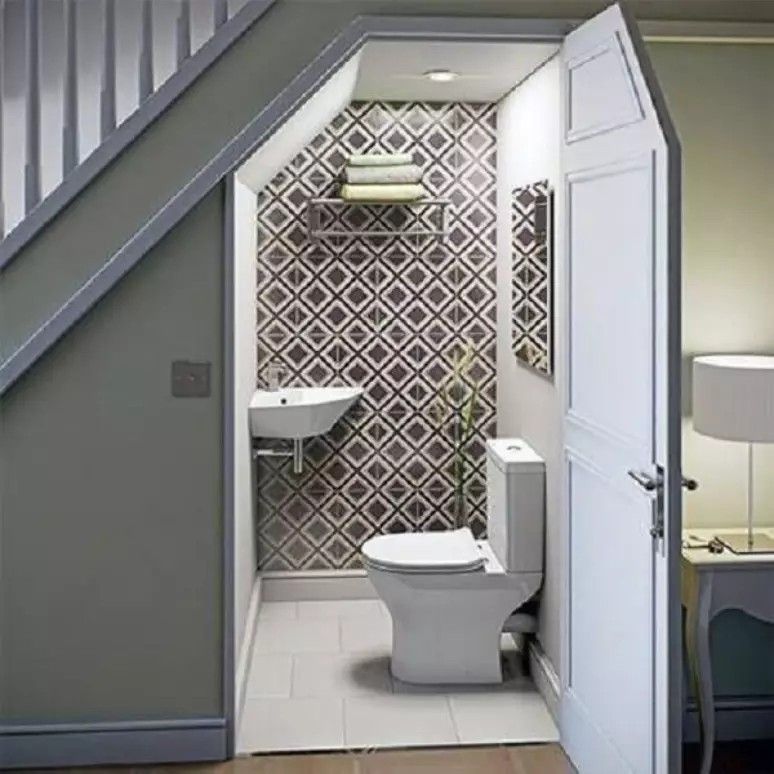
    bathroom under the stairs
    source: Pinterest

    You May Be Undermining Your Staircase—Literally

    This one is scarier than the average person realizes. A staircase is a structure. It bears the weight of people easily moving up and down all day long, and is often tied into the framing of multiple floors.

    I had a client call me in once because their stairs were sagging. A previous owner had carved out too much of the framing under the staircase to fit a vanity. No reinforcement. No engineer. They scoped it out, and thought, “we’ll just cut it out and see what happens.”

    The fix was not cosmetic. Jacking the stairs up, adding back support framing was extensive, and a lot of money. All because someone decided a powder room was a good idea in a space it simply did not belong.

    Small Room, Awkward Experience

    Let’s say you make it work. The plumbing is in, the framing was sufficient, and it passed code. Good. You now have a “space” …that feels weird.

    The ceiling slopes. It’s so cramped in front of the sink there’s little place to stand. With the often poor lighting, you might feel like you’re in a cave—or worse. The space is so limited anywhere to put anything. And we won’t even talk about what it’s like to clean the back of the toilet when it is crammed up against an angled wall behind some moldy tub.

    In short: just because you can almost shoehorn a bathroom in doesn’t mean it will be one that people will want to use…

    Privacy? What Privacy?

    Under-stair bathrooms tend to be located next to high-traffic areas, like entry foyer, living rooms, kitchens, etc. Which means every flush, every faucet run, every embarrassing moment is shared with whoever is just outside the door.

    I have had people try to remedy this problem with white noise machines, to build up the soundproofing in the walls (which helps a little). But the soundproofing isn’t the issue—it’s the location; it’s uncomfortable for everyone. A bathroom deserves some degree of separation. Tucking one into a hallway nook simply isn’t good enough.

    It May Actually Hurt Your Home’s Value

    People buy into the fallacy that adding a bathroom = adding value. And this is generally true, but an appraiser and buyer are looking at the function of the bathroom and not just how many fixtures there are.

    If the bathroom feels like a weird add-on, it feels small, or it was obvious it was a poorly thought out addition? It could backfire. I have interviewed real estate agents who mention these bathrooms are often mentally subtracted from the listing. Even worse, they can cause the buyer to begin to look for other indicators of a rushed or DIY renovation.

    In some instances, they are considered something to remove, rather than a bonus.

    So… What Should You Do Instead?

    Add a bathroom more creatively, even in a small house:

    Repurpose an existing closet; they are already framed and often near to plumbing.

    Use space in the basement or garage; access to lines and venting can be much easier.

    Stack bathrooms. Adding above and below existing bathrooms is more straightforward from a plumbing perspective.

    Consider space-saving design. Wall-mounted toilets, small sinks, and sliding doors can accomplish a lot in a small footprint.

    One of the smartest things I’ve seen? Changing a seldom-used laundry closet into a compact, sleek powder room—including a vent fan, decent light, and actual elbow room. It didn’t change the integrity of the space. It didn’t weird out future buyers. And, it didn’t give off an essence of stairwell mildew.

    Before jumping into any big changes, take a look at some bathroom remodeling options that can make better use of your space without sacrificing safety or design.

    Just Because You Can Doesn’t Mean You Should

    That little area under the stairs looks like it might be useful. And you technically might be able to fit a toilet and sink in there. But before you go down that path, know what you are actually committing to.

    Less airflow. Awkward plumbing. Possible code violations. Long-term maintenance. And perhaps a bathroom that ends up being more of a closet with plumbing than a usable space.

    So if you are thinking about developing a bathroom under the stairs, my advice is simple: slow down. Talk with a professional. Look at all your options. There are better, smarter ways to make your home function better, without jeopardizing its structure, value, or comfort.

    Some ideas just need to stay… under the stairs.
  • What a Red Porch Light Means

    What a Red Porch Light Means

    source: Jesse Stewart, Townsquare Media

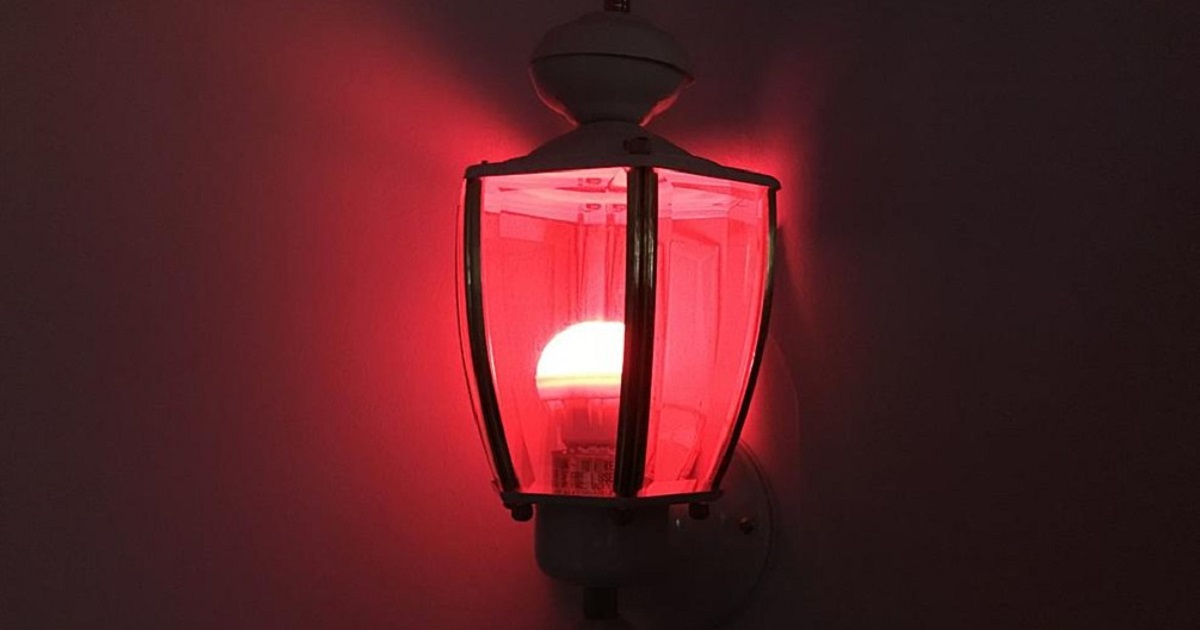
    So, here’s something you may have seen, and not thought twice about: someone’s porch light being red at night. Like, bright red — not orange, not rusty, but obviously red. Maybe you thought it was a weird bulb or a leftover decoration from Christmas. But if you saw it in February, it most likely wasn’t a coincidence.

    As it turns out, there is actually a pretty cool and meaningful reason behind it.

    So — February. Everybody knows Valentine’s Day is in February, and kids get candy and cards, there are hearts everywhere, and roses cost an outrageous amount of money. When someone sees a red light during February, they probably think of it as “just Valentine’s Day.”

    But, February is more than just about love — it’s also American Heart Month.

    American Heart Month is a real, formal awareness campaign for heart health — heart disease, prevention, etc. And that red light — it’s part of the campaign. It’s kind of an understated little statement that says, “hey, take a second to care about your heart.”

    Then we had the red clothing — you may have heard of National Wear Red Day? nationalwearredday.com. Wear Red Day is the first Friday of every February, and it is meant to get people to wear red in observance and support of heart health awareness. You’ll see it on social media, and maybe even in dress code policy or school days. But the red porch light creates a different feel — something more evident, more… permanent. It’s sort of like glowing quietly and just reminding you without any words.

    Just swap the regular porch bulb for a red one, done. No big splash, no speech, just the little red light. It is understated, but honestly, it is kind of beautiful too. Especially if you drive into a neighborhood and see another one or two. It creates this little silent network of reminders — people acknowledging awareness, whether they are saying anything or not.

    And it creates good conversations too. Someone sees a red light, asks about it, suddenly they know a bit more about heart disease, or they remember to check their blood pressure, or schedule a physical. Little bit of a ripple effect. That’s the whole point.

    And while we are talking about this. Yeah, colored porch lights signify different things. Green ones, for example, usually indicate support of military and veterans. So there is a bit of a code out there, if you notice it.

    Anyway, back to red. It is not a huge commitment, just swap out a bulb. But by doing that you are kind of indicating support for something important — to remind people to watch what’s going on with their health. It is worth mentioning, it’s sort of cool looking too.

    So that’s pretty much it — that’s what it’s all about, the red porch light. It’s not scary, and it’s not some strange look. It’s acknowledging people who face heart conditions and supporting a group who is trying to create awareness, and acknowledge people who lost someone and those that are still here trying to do better.

    Now you will know. And maybe next February, you will join in.

    No speeches needed. Just a red light!

  • “Found in the kitchen of a new house: a rack the size of a standard oven. Any ideas?”

    “Found in the kitchen of a new house: a rack the size of a standard oven. Any ideas?”

    This post may contain affiliate links. If you make a purchase through links on our site, we may earn a commission.

    When you hear stories about people finding strange objects in their homes, it’s hard not to get intrigued. Recently, I came across a story where someone found a peculiar item in their kitchen after moving into a new house. It was about the size of a standard home oven rack and seemed utterly out of place. This mysterious object got me thinking about all the bizarre and fascinating things people discover when they move into a new place.

    I remember the first time I moved into a new house. The excitement of unpacking, exploring every corner, and making the place my own was exhilarating. Yet, the idea of stumbling upon an unidentifiable item like the one in this story adds a whole new layer of intrigue to the moving process. Imagine opening a cabinet and finding something that looks like it could be a relic from another era, with no clue about its purpose or origin.

    The object in question was described as a flat, metallic item with a series of evenly spaced, slightly raised ridges. It didn’t match any of the conventional kitchen tools or accessories. Naturally, the new homeowners were stumped. They tried to piece together its purpose, but nothing seemed to fit. Was it a baking accessory? A part of an old appliance? A DIY project that never saw completion? The possibilities were endless, yet none of them made sense.

    source: Reddit

    This story reminded me of a similar experience I had when I moved into my first apartment. While I didn’t find anything as mysterious as a ridged metal rack, I did come across a few oddities left behind by the previous tenant. There was a small, intricately carved wooden box with a lock but no key. For weeks, I pondered over what could be inside and what significance it might have had. I even took it to a locksmith, hoping to uncover its secrets. When we finally managed to open it, we found nothing but a few dried flowers and a faded photograph of a couple I didn’t recognize. It was a small mystery, but it added a bit of charm and history to my new home.

    Back to the oven rack-sized mystery, it’s fascinating how an unidentified object can spark curiosity and bring people together. When the homeowners first discovered the item, they did what any curious person would do—they asked around. Friends, family, and even neighbors were invited to inspect the object and offer their theories. Some thought it might be a vintage kitchen tool, others suggested it could be a component from an old piece of furniture, and a few even speculated that it might be an artist’s tool. Despite the numerous guesses, no one could definitively identify it.

    source: Amazon

    One particularly amusing theory came from an elderly neighbor who was convinced it was an old-fashioned meat tenderizer. According to her, people used to place meat on the rack and pound it with a mallet to soften it up. While this idea seemed far-fetched, it added to the fun of guessing and kept the mystery alive.

    As the mystery of the ridged metal rack continued to puzzle the homeowners, they decided to reach out to the previous owners of the house. To their surprise, the former occupants were just as clueless about the item. They had inherited it from the owners before them and had no idea what it was either. This revelation added another layer to the mystery, suggesting that the object had been passed down through several hands, each owner as baffled as the last.

    This got me thinking about the objects we accumulate over time and the stories they hold. Every item in our homes, from the furniture to the knick-knacks, has a history. Some histories are known and cherished, while others remain a mystery. These unknown stories add character to our homes and remind us that we are part of a continuum, inheriting bits and pieces from those who came before us and leaving our own marks for those who will come after.

    source: Amazon

    In the end, the ridged metal rack stayed just as mysterious as when it was first found. Despite all the theories and guesses, it never gave up its secrets. And honestly, that’s part of the fun. Not every puzzle needs solving; sometimes, it’s the guessing game that makes it interesting.

    I did my own research though and discovered it might be for grilling appetizers, but that’s just one more guess in the mix.

    If you ever move into a new place, keep your eyes open for odd finds like this. It might be frustrating not to know what something is, but it’s also a great way to start conversations and get to know people. Plus, who doesn’t love a good mystery? Even if you never figure it out, the stories and laughter it brings are worth it.

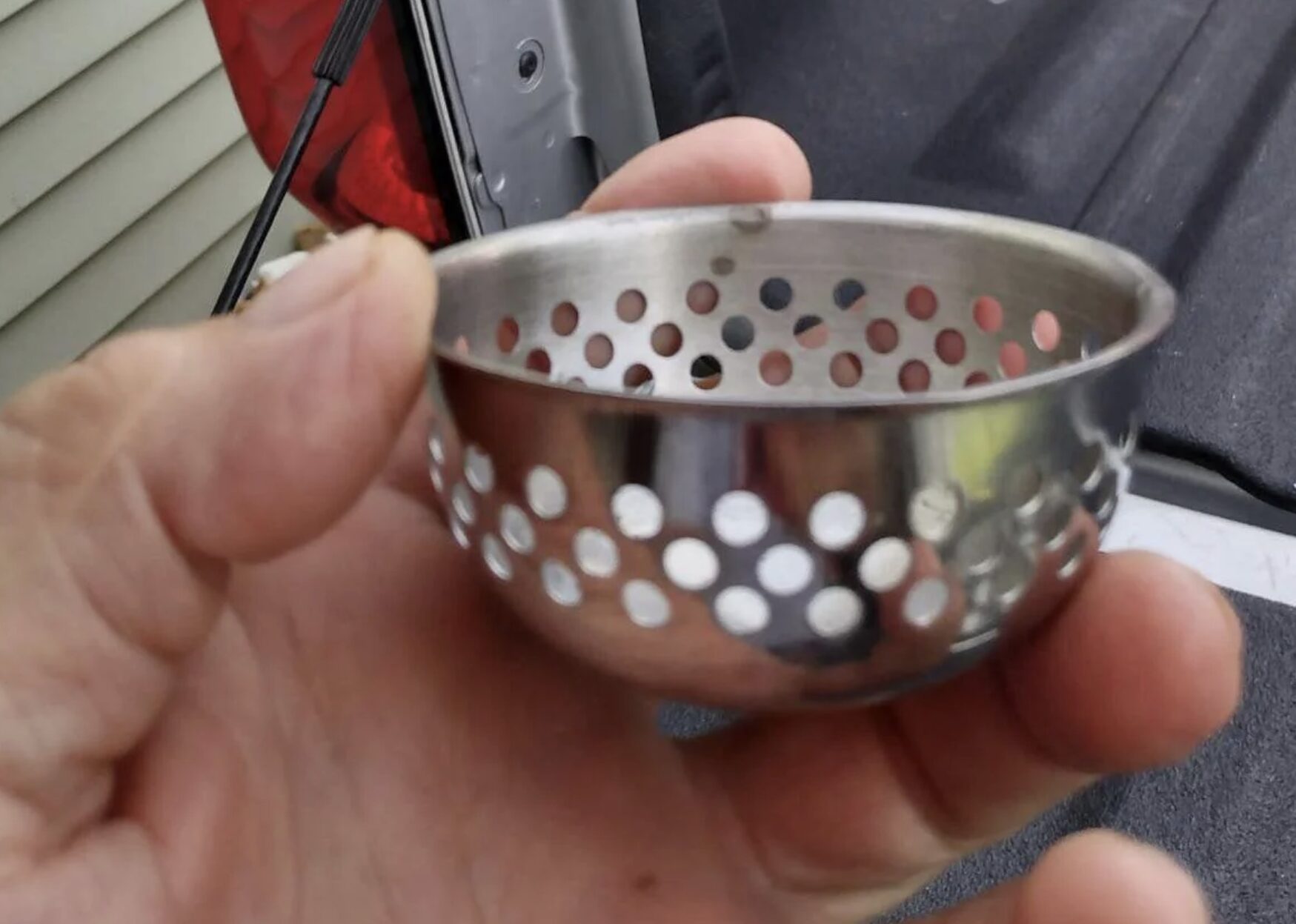
    Kitchen mysteries like this aren’t rare, I once got stumped by a weird sink insert that turned out to be a clever built-in compost bin hiding right under the faucet.

  • How To Safely De-Ice Your Walkways This Winter

    How To Safely De-Ice Your Walkways This Winter

    If you live somewhere that sees cold, snowy winters, you’ve probably already started to prepare. We get freezing winters with tons of snow, so I’ve already dug out our snow shovel. I had also made a mental note to go pick up a container of road salt, but now that I’ve seen this hack, I don’t think I’ll have to after all!

    I’m always on the lookout for ways to make winter a li,ttle more bearable so if this easy hack can take care of slippery walkways, I’m absolutely willing to give it a shot!

    While you’re keeping your walkways ice-free, it’s also smart to learn how to avoid falling on the ice.

  • I THOUGHT MY HUSBAND WAS LIVING A DOUBLE LIFE UNTIL I FOUND HIS SECRET PROFILE AND READ 

    I THOUGHT MY HUSBAND WAS LIVING A DOUBLE LIFE UNTIL I FOUND HIS SECRET PROFILE AND READ 

    Midnight transformed my quiet bedroom into a scene of silent upheaval. A single glow from my phone screen illuminated a secret profile I was never meant to see, and suddenly my husband’s face was staring back at me from an unfamiliar account. My pulse roared in my ears. Chronic pain had already stolen my physical strength, my sleep, and the last fragments of my self-worth, leaving me fully braced for the devastating sting of betrayal.

    Instead of heartbreak, I uncovered a love so desperate and fierce that it had nowhere left to go but underground. That hidden profile was not an escape—it was his lifeline. It was a quiet digital sanctuary where he reached out to strangers, seeking the language, practical tools, and emotional stamina required to hold onto me while I slipped further into the dark. Every saved medical article, every carefully phrased question, and every vulnerable post was undeniable proof that while I believed I was nothing more than dead weight, he was silently weaving a safety net beneath us both.

    The real rupture in our life wasn’t his hidden account; it was the immense, aching distance my pain had carved between who I thought I was and the person I had become. His secret journal didn’t erase the crushing physical exhaustion, the trauma of endless appointments, or the bitter nights when I hated my own failing body. But it did something gentler, harder, and holier: it forced me to see myself through the eyes of a partner who steadfastly refused to view me as a burden, even when I treated myself like an unbearable weight. In the quiet dark of that room, I finally understood that he wasn’t looking for an exit—he was simply learning how to stay.

  • If You Spot This Metal Bar in a Restaurant, This Is What It’s For

    If You Spot This Metal Bar in a Restaurant, This Is What It’s For

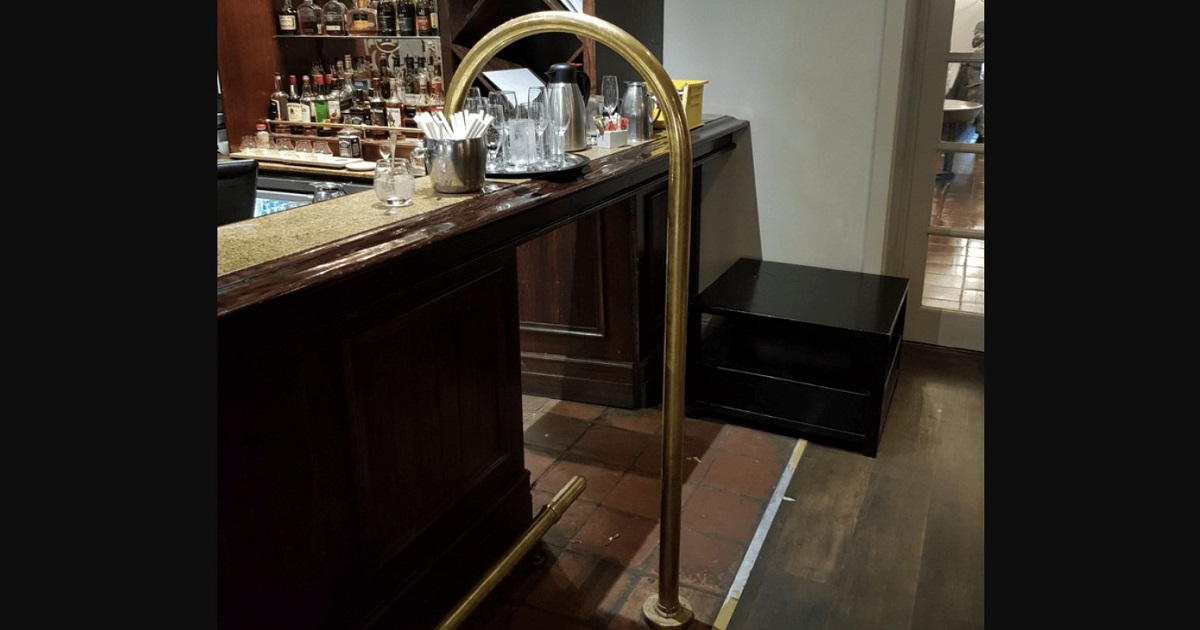
    source: FRICKENHANZOMAIN/REDDIT.COM

    Have you ever noticed a shiny metal bar running along the front of a restaurant’s bar counter? Perhaps you’ve wondered why it’s there or what purpose it serves. Well, we’re here to tell you! That metal bar is called a service bar rail, and it actually serves a very practical function.

    You see, the service bar rail acts as a divider between the customers and the area where the bar staff work. It’s designed to keep patrons from drifting into the section of the bar where the servers need to move freely to collect glasses and serve drinks. This helps maintain a smooth and efficient workflow behind the counter, especially during busy periods.

    Video Muted

    The service bar rail is usually made out of brass, which gives it a stylish and attractive appearance. However, the choice of brass for the construction of the bar rail is primarily for aesthetic reasons. Both the bar rails and the foot rails along the bar are typically fashioned in the same manner and material, creating a cohesive and visually appealing design.

    You might be wondering why it’s always brass and not some other metal. Well, the use of brass in bar rails is more of a traditional choice rather than a functional requirement. Brass has long been associated with elegance and sophistication, and it has become a popular material for various elements in bars and restaurants, including the service bar rail.

    Next time you visit a bar or restaurant, take a closer look at the bar counter. You’ll likely notice the service bar rail and the foot rail, along with an opening under the counter. This opening allows bartenders, in certain designs, to easily access the bar area. It’s crucial to keep this area clear of customers to ensure smooth movement for the staff.

    In some cases, you might also come across the term “waitress station” when researching about the service bar rail. This refers to the area where the servers gather drinks and other items needed to serve the customers. The presence of the service bar rail helps prevent customers from standing in this area, blocking access for the staff and potentially causing delays in service.

    So, the next time you’re enjoying a drink at a restaurant or bar, take a moment to appreciate the functionality and purpose behind that shiny metal bar. The service bar rail, typically made of brass, serves as a stylish divider between the customers and the busy service area. It ensures a smooth and efficient workflow, while also adding an elegant touch to the overall design of the bar counter.

    Some design elements reflect smart planning, but others can be red flags — here are 10 signs you’re dining at a bad restaurant you might not even realize you’ve seen.

  • What an Elephant Statue at a Front Door Means

    What an Elephant Statue at a Front Door Means

    source: Getty Images/iStockphoto

    O.K. so — have you ever seen a house and there is just … an elephant statue? Right by the front door. Not because it’s part of a setup or performatrix or anything like that, it just is. No sign, no joke, not even a planter next to it as camouflage. Once my sister and I saw one and we literally just dropped. As in, what is that even doing there? It felt weird. Not creepy per se but sort of — off? I don’t know, something about that. I was like, “Is this normal?” and she’s like, “Wait, is this, like, a thing? Are we not getting what’s she’s saying or is this just vaguely random front porch energy?” And to be honest … I still don’t.

    Turns out, yeah, there’s definitely a thing.

    Video Muted

    It’s not just a design choice or whatever. I mean sometimes it is, like some people definitely just buy them because, I don’t know, they saw it on Pinterest once. But also, there’s this whole deeper meaning people attach to them. Especially around the front door. That part’s weirdly specific.

    Feng Shui, I guess. That’s where it starts.

    So this goes back to Feng Shui—Chinese, uh, space arrangement philosophy? Energy flow… house harmony stuff. I’m not gonna pretend I’ve read a book about it, but the gist is, how you place things in your house affects your vibe. Like actual vibe. Energy flow. Chi. Not metaphorical energy—like, real, invisible home energy that’s either good or bad depending on how your stuff’s arranged. It’s a whole thing.

    And elephants, in this context, are like—symbols. Big ones. They’re supposed to bring in strength and wisdom and protection and luck and honestly it sounds made up until you’ve had a string of bad days and then suddenly you’re Googling “which direction should my elephant statue face.”

    The direction thing is… kind of everything.

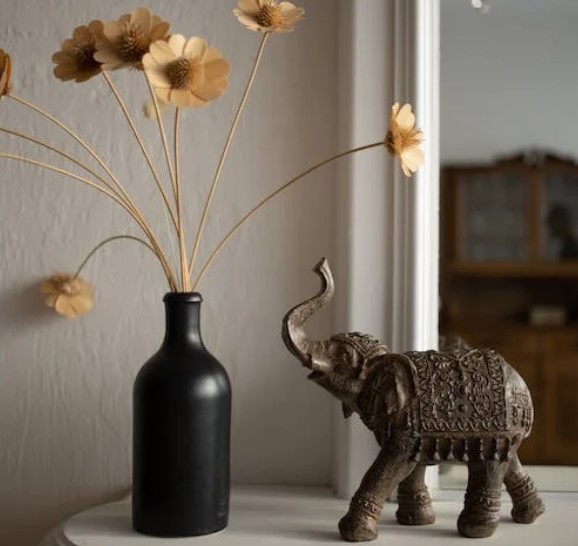
    Right, so. If you’ve got one of these statues—elephant statues—and it’s facing outward? Like it’s looking at the street? That’s supposed to pull good luck into your home. Like the elephant’s out there grabbing blessings off the sidewalk and dragging them in. It’s a whole visual.

    Also, the trunk matters. I don’t know who decided this, but apparently the trunk needs to be up. That means luck. Showering luck. A trunk down is—I don’t know, some people say it means fertility? Others say it’s just less lucky. It’s a thing people argue about on forums, which is wild.

    But if it’s facing in—like into your house, not out—that’s protection mode. That one’s not about attracting anything. It’s more like guarding what you already have. So… it’s either a spiritual doorman or a spiritual bouncer, depending which way it’s pointed.

    elephant statue
    source: Pexels

    But also… it’s not just a China thing. Or a “Feng Shui” thing.

    Elephants show up everywhere. Not literally, obviously, but symbolically. India, especially—like, the god Ganesha has an elephant head. He’s this remover of obstacles. Big wisdom energy. Kind of the guy you’d want looking out for you if, say, your life was a mess and you were hoping your front porch could fix it.

    And even in places without any spiritual tie-ins, elephants just kinda carry this weight. Not just because they’re huge. They’re calm. Patient. They look like they’ve seen things. And you believe they remember everything. No idea if that’s true or just something we all decided was true, but… it sticks.

    People trust them. Not in a “help me move” kind of way, but in that deep, symbolic, “this animal has emotional depth” way. Like a therapist with tusks.

    Also, it’s decor now. Let’s not pretend it’s not.

    But yeah, obviously, for a lot of people it’s just… an elephant. You can buy one at Target. They’re everywhere. Tiny ones. Gold ones. Minimalist gray ones. It’s become one of those design things people pick up without really knowing why, just that it “feels good.” Like, the kind of thing you add to your cart with throw pillows and a candle you’ll never light.

    And that’s fine. No shade. Not everything has to be a sacred act. Sometimes you just think, “This makes my porch feel less sad.” That’s enough of a reason.

    But then you end up with a statue that’s maybe accidentally channeling ancient energy principles and now your house is protected from demons and you didn’t even mean to do that. Oops.

    So what does it mean, really? I don’t know. But also, I kind of do.

    I mean… it probably depends, right? Like, who put it there, what they were thinking—if they were thinking—and which way the thing’s even facing. Could be for luck, Could be protection. Could be someone’s grandma was like, “You need this by your door,” and they didn’t argue. Or maybe it was just on clearance and looked heavy enough not to tip over in the wind. Honestly? Could be anything.

    But that’s kinda the nice part? It doesn’t have to totally make sense. It feels like it matters. Like the elephant’s just… holding it down somehow. Even if it’s a little crooked or shoved behind a dead fern, it’s still there, doing its quiet little job. Or just existing. Which honestly might be enough.

    So yeah. Next time you see one—don’t just think “oh cute.” Or think that, but also maybe pause a second. That statue’s got history. It’s been through empires and religions and grandma’s porch and Etsy. And now it’s here, outside someone’s front door, doing its little silent job.

    Or maybe it’s just standing there. Watching. Who knows.

  • What Does a Purple Porch Light Really Mean

    What Does a Purple Porch Light Really Mean

    What Does a Purple Porch Light Really Mean

    Have you ever passed by a house with a purple porch light and wondered what it stood for?
    It’s not just a decorative choice—it carries a powerful message of hope, awareness, and solidarity.

    That soft purple glow is a symbol of support for survivors of domestic violence.
    It sends a clear and compassionate message: “You are seen. You are supported. You are not alone.”

    Why Purple?

    The color purple represents strength, courage, and survival.
    Displaying a purple light is a way to break the silence around domestic abuse—a problem that impacts people of all genders, ages, and backgrounds.

    Domestic violence is not only physical. It can be:

    • Emotional
    • Psychological
    • Verbal
    • Sexual
    • Financial

    Too often, victims suffer quietly, feeling isolated or afraid to speak out.
    But a purple light tells them: “This home stands with you.”

    More Than a Bulb—It’s a Movement

    The Purple Light Nights campaign began in Washington State and has since spread across the U.S., especially during October, which is Domestic Violence Awareness Month.

    These lights do more than illuminate porches:

    • They spark conversation
    • Raise awareness
    • Encourage open dialogue
    • Inspire communities to stand together against abuse

    How You Can Help

    💜 Educate yourself and others about the signs of abuse


    💜 Share resources like hotlines, shelters, and support organizations
    💜 Be a safe space—listen without judgment
    💜 Support prevention efforts, from schools to community programs
    💜 Hold abusers accountable and promote healthy, respectful relationships

    A Small Light, A Big Message

    The next time you see a purple porch light, remember—it’s not just a light.

    It’s a symbol of empathy, a beacon of awareness, and a promise to stand with those affected by abuse.

    One light may seem small, but together, we can shine a brighter path forward—one of healing, hope, and change.

    You’ve just read,  What Does a Purple Porch Light Really Mean. Why not read Manager Had To Hire A New Employee.

  • The Secret Behind Coca-Cola’s Yellow Bottle Caps

    The Secret Behind Coca-Cola’s Yellow Bottle Caps

    The Secret Behind Coca-Cola's Yellow Bottle Caps

    The Secret Behind Coca-Cola’s Yellow Bottle Caps

    Ever spotted a Coca-Cola bottle with a bright yellow cap instead of the familiar red one? You’re not alone. Every spring, shoppers notice these unusual bottles appearing on store shelves, and many wonder if they’re a new flavor or a special promotion. The real story is far more interesting.

    Why Does Some Coca-Cola Have a Yellow Cap?

    The yellow cap isn’t a marketing gimmick or a limited-edition design. Instead, it identifies bottles of Coca-Cola that are certified Kosher for Passover.

    During the Jewish holiday of Passover, many observant Jews avoid foods containing certain grains and, for many Ashkenazi Jewish communities, ingredients made from corn as well. Since regular Coca-Cola sold in the United States is typically sweetened with high-fructose corn syrup, it isn’t suitable for those observing these dietary traditions.

    To accommodate Passover, Coca-Cola produces a special version in certain markets using an alternative sweetener that meets Passover kosher requirements. The yellow cap makes it easy to distinguish these bottles from the standard version.

    A Tradition That Dates Back Decades

    The connection between Coca-Cola and kosher certification goes back to the 1930s.

    Atlanta rabbi Tuvia Geffen worked with the company to ensure Coca-Cola’s formula could meet kosher dietary standards. Since then, Coca-Cola has continued producing a special Passover-certified version in selected markets each spring.

    Today, these bottles are typically marked with a Kosher for Passover certification symbol, often shown as OU-P, indicating approval by the Orthodox Union.

    Why So Many People Look for Yellow-Cap Coke

    Interestingly, many people who buy yellow-cap Coca-Cola aren’t observing Passover.

    Some soda enthusiasts believe the Passover version has a cleaner, smoother taste because it may use cane sugar instead of high-fructose corn syrup, depending on the production market. Others simply enjoy trying seasonal products that aren’t available year-round.

    Because availability is limited, some fans even stock up while it’s on store shelves.

    Discover more

    Cooking & Recipes

    Business & Corporate Law

    Food & Drink

    Does It Really Taste Different?

    Taste is subjective, but many people notice a subtle difference.

    Those who prefer cane sugar often describe it as having:

    • A smoother sweetness
    • A cleaner finish
    • Less syrupy aftertaste

    Others say they can’t tell the difference at all. The only way to know is to try it yourself.

    Where Can You Find It?

    Yellow-cap Coca-Cola is most commonly sold in areas with larger Jewish communities during the weeks leading up to Passover.

    Depending on your location, you may find it at:

    • Large grocery store chains
    • Kosher supermarkets
    • Selected warehouse clubs
    • Specialty food stores

    Availability varies by region, so not every store carries it.

    How to Identify the Real Passover Version

    If you’re specifically looking for Kosher for Passover Coca-Cola, don’t rely on the cap color alone.

    Look for:

    • A yellow bottle cap (where used)
    • An OU-P or other recognized Passover kosher certification on the label or cap

    These markings confirm the product meets Passover dietary requirements.

    Frequently Asked Questions

    Is yellow-cap Coca-Cola a different flavor?

    No. It’s still classic Coca-Cola. The primary difference is the sweetener used in certain Passover-certified batches.

    Is it healthier?

    Not really. Whether sweetened with cane sugar or high-fructose corn syrup, both contain added sugars and should be enjoyed in moderation.

    Can anyone buy it?

    Absolutely. The bottles are available to anyone while supplies last.

    Is it available all year?

    No. Passover-certified Coca-Cola typically appears for a limited time each spring and is only distributed in selected markets.

    Final Thoughts

    The next time you notice a Coca-Cola bottle with a bright yellow cap, you’ll know it’s more than just a colorful design choice. It represents a decades-old tradition of producing a version of Coca-Cola that meets Passover dietary requirements while giving curious shoppers a chance to try something a little different.

    Whether you’re observing Passover, collecting seasonal products, or simply curious about the difference in taste, yellow-cap Coca-Cola has become one of spring’s most interesting grocery store discoveries.

    You’ve just read The Secret Behind Coca-Cola’s Yellow Bottle Caps . Why not read  Ever Seen the Creepy Wall-Clinging Moth

  • What It Is And Why There’s A Strange Shelf Inside Some Toilets

    What It Is And Why There’s A Strange Shelf Inside Some Toilets

    Now, just imagine this: You enter a bathroom, pull up the toilet lid, and bam. A weird shelf toilet sitting just above the waterline in the bowl, like a tiny landing pad for, well, your business. At first, you might say, what did the plumber do wrong? Maybe they ran out of parts? But then you understand it isn’t a mistake. It’s supposed to be there.

    If you have ever recognized this strange feature, however, you are looking at what is known as a shelf toilet or, more formally, the German shelf toilet. I know what you’re thinking, though. “Who in their right mind would come up with a toilet like that?” I get it. It’s a little odd, a little weird, but it’s actually got a fairly logical explanation.

    And I’m here to tell you everything.

    Shelf toilet with a raised platform
    source: Reddit

    So What’s Up With That Shelf?

    At first glance, the shelf toilet may appear to be a misstep of pooping engineering. What kind of person designs a toilet where whatever you dispense doesn’t directly drop into water? Seems inefficient, right? But here’s the thing: that shelf is actually for inspection, a very specific purpose inspection.

    If you’re thinking it’s some strange European bathroom thing, stop right there. In ancient times, long before modern medical tests were available, examining stool was the easiest way to detect potential health problems. It’s kind of a do-it-yourself health check. The platform lets you easily check your waste for parasites, blood or diet-related problems. It was a sensible way of detecting health problems early, long before the time when doctors began to perform tests such as we conduct now.

    It’s not glamorous, sure. But there’s a reason this design has evolved in parts of Europe for recent decades.

    Health Check and Then Some: Other Surprising Benefits

    Well, it’s not just for looking at your stool for signs of disease. There are some practical perks to the shelf toilet that you didn’t know you needed:

    Less Splashback: Because let’s face it, we’ve all experienced that awkward moment right when you sit down and BAM! Splashback. Well, with the shelf toilet, wastes plummet onto a dry platform instead of slapping into the water. It means no drippy splashback, which, let’s face it, is a huge victory.

    Better Hygiene: The design means it’s easier to check waste for indicators of health, but it also helps reduce mess. When waste doesn’t sink into the water right away, the opportunity for water splashes and the spread of bacteria falls away. And, of course, you still need to clean up after you use one, but the shelf can make things a bit more sanitary than a traditional toilet.

    But yes, there is a disadvantage to the whole “dry platform” thing: the smell. Since the waste isn’t submerged at once, odors can hang around if you walk away from the toilet for an extended time without flushing. That’s why they’re often accompanied by a strong flush and ventilation system designed to address that problem.

    source: Pixabay

    So, Why Aren’t These Toilets Everywhere?

    I know what you’re probably thinking: “If this shelf toilet is so great, why don’t I see it everywhere?” Well okay then, the answer is actually quite simple. Washdown toilets are favored in most of the world — especially the United States — where poop drops directly into a basin of water. Why? Because they tend to be more hygienic and odor-controlling. The water immediately covers the waste, which significantly decreases smell and possible contamination.

    Still, in Sweden, Germany and the Netherlands, the shelf toilet design is quite popular. And in locations with older plumbing systems, you may even see them in medical contexts, where practitioners require a clearer view of stool for diagnostic reasons.

    What to Do If You Find a Shelf Toilet?

    So, say you are at a hotel being offered a shelf toilet. What now? Here’s how to handle it:

    Don’t Panic: No, it’s not broken. Think of that shelf as being there for a reason. It’s just doing its job.

    Flush Promptly: While it’s great for inspection, the shelf can cause odors to linger. Thus, flush immediately when finished to keep everything fresh.

    Grab the Toilet Brush: Some users may need to clean the shelf after using it. But don’t fret, a toilet brush typically remains within arm’s reach precisely for moments like this.

    source: Pixabay

    The Shelf Toilet (Quirky but Practical)

    So the next time you see a shelf toilet, try to view it through another perspective. It’s not just a strange design decision; it’s a practical piece of plumbing history. In its simplest form, this design has helped people assess their health for more than a century. Maybe the bathroom isn’t the most glamorous part of a home, but the topic has been an invaluable crutch to those who’ve known how to lean on it.

    And while some places may not have embraced it yet, in others it’s quietly doing its work: Ensuring that people remain aware of their health, one inspection at a time.