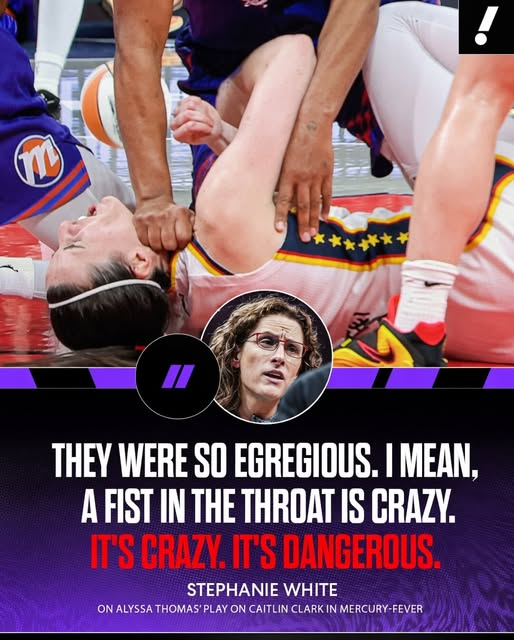
Stephanie White’s Frustration Over Caitlin Clark No-Call Adds New Fire to Fever–Mercury Controversy
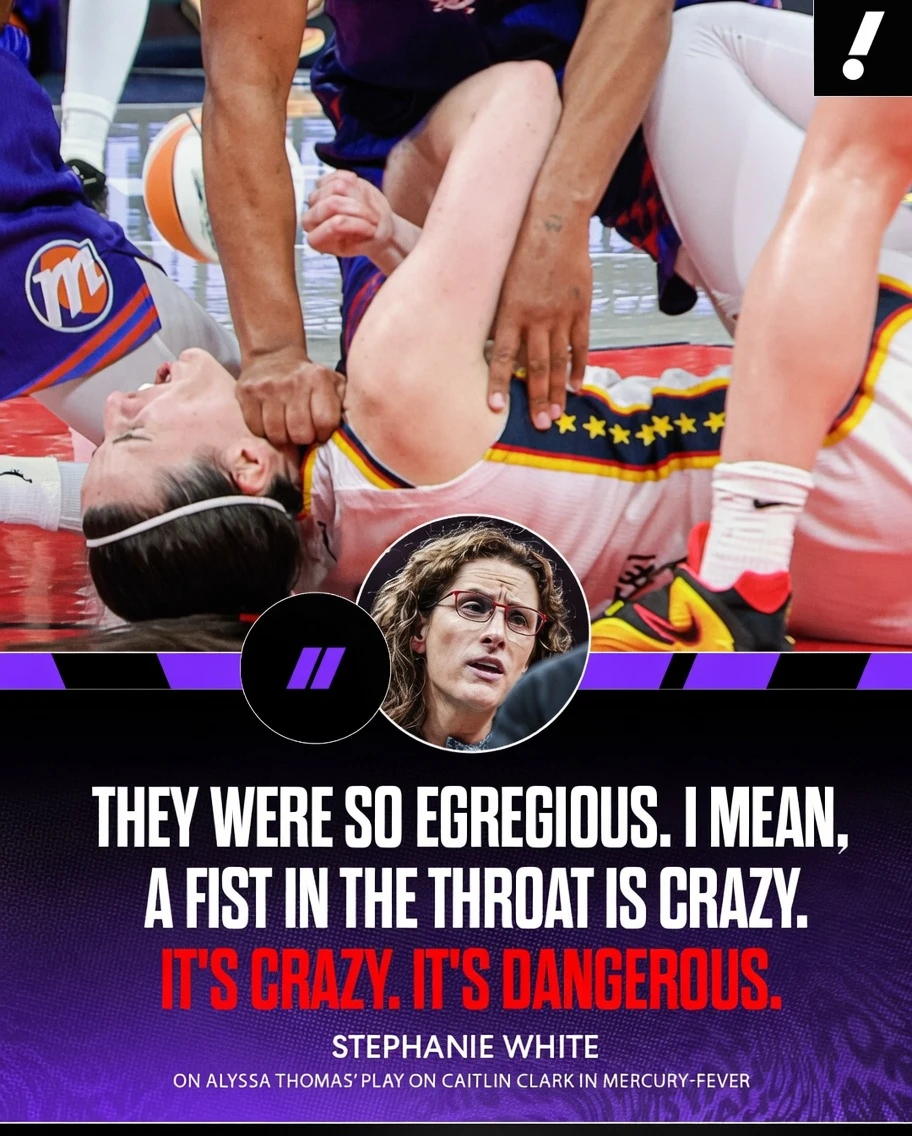
The Indiana Fever’s latest matchup against the Phoenix Mercury delivered more than another hard-fought WNBA battle.
It delivered another flashpoint.
During Wednesday’s Mercury–Fever game, head coach Stephanie White expressed visible frustration after a no-call involving Caitlin Clark, adding a new layer to the growing conversation around how physical defenses are being allowed to guard one of the league’s most watched stars.
For the Fever, the moment was not simply about one missed whistle.
It was about a larger pattern that has followed Clark throughout the season — hard contact, emotional reactions, inconsistent officiating debates, and the question of whether the WNBA’s brightest young star is receiving the same protection other elite playmakers expect when driving through pressure.
White’s reaction quickly became one of the defining talking points of the game.
In the heat of competition, coaches often argue calls. That is nothing new. But this particular reaction carried more weight because of the player involved and the ongoing attention surrounding Clark’s physical treatment on the floor.
Clark has become one of the most scrutinized athletes in basketball. Every drive, every fall, every defensive bump, and every reaction is analyzed in slow motion by fans, analysts, and critics. That level of attention can turn a single no-call into a league-wide debate within minutes.
That is exactly what happened here.
The Fever were already playing in a high-pressure environment. Games against teams like the Mercury carry extra intensity because every possession matters, especially for an Indiana team still working to establish consistency and identity. Clark’s ability to create offense, draw defensive attention, and set up teammates makes her the engine of the Fever’s attack.
So when contact goes uncalled, the impact feels bigger than one possession.
It affects rhythm.
It affects momentum.
And in a close game, it can affect trust.
Stephanie White’s frustration seemed to come from that exact place. As a coach, she is responsible not only for strategy, rotations, and late-game adjustments, but also for protecting the confidence and physical safety of her players. When she believes Clark absorbs contact without a whistle, her reaction becomes part advocacy, part competitive emotion, and part message to the officials.
That message was clear: Indiana wanted consistency.
For Clark, this is becoming a familiar part of her professional journey. Since entering the WNBA, she has been guarded with extreme physicality. Opponents understand that giving her space is dangerous. They pressure her early, chase her through screens, body her on drives, and try to disrupt her timing before she can fully control the possession.
That is what great players face.
But the challenge for the league is determining where tough defense ends and illegal contact begins.
That line is where controversy lives.
Fans who support Clark argue that she takes more contact than the whistle reflects. They believe defenders are allowed to push, bump, and crowd her in ways that would draw calls for other high-usage stars. Critics push back, saying physicality is part of professional basketball and that Clark, like every young star, must adjust to the speed and strength of the WNBA.
May you like
nga.A simple skit about a vacuum cleaner suddenly turned into a television disaster
Both sides are loud.
And moments like Wednesday’s no-call only make the debate hotter.
What makes the situation more complicated is Clark’s role within Indiana’s offense. She is not a player who can simply disappear into the system. She is the system’s primary creator. When she is knocked off rhythm, trapped aggressively, or forced to play through contact, the entire Fever offense can become unstable.
That means officiating controversies involving Clark are not just individual complaints.
They become team issues.
White understands that better than anyone. Her frustration reflects the pressure of trying to build a functional offense around a player who attracts constant defensive attention while also managing the emotional weight that comes with Clark’s celebrity status. Every call feels magnified. Every non-call becomes a referendum on fairness, protection, and league standards.
That is a difficult environment for any coach.
It is even more difficult when the player at the center of it is carrying the kind of visibility Clark brings to every arena.
The Mercury, of course, had their own perspective. Physical defense is part of their job. Against a player like Clark, the goal is to make everything difficult. The more uncomfortable she becomes, the more likely Indiana is to lose offensive flow. That strategy is not unusual. It is how teams defend elite guards at every level.
But when the contact reaches a level that draws visible protest from the opposing coach, the conversation shifts.
Was it playoff-style physicality?
Or was it a missed call?
That question is exactly why the clip spread so quickly.
Beyond the immediate game, the moment also adds to a larger WNBA storyline. The league is growing rapidly, and with that growth comes more scrutiny. Officiating has become one of the most debated topics among fans. As more viewers tune in, more plays are clipped, shared, slowed down, and argued over.
In that environment, consistency matters more than ever.
The league wants physical, competitive basketball. But it also must protect offensive freedom and player safety. Striking that balance is never easy, especially when a player like Clark becomes both a competitive target and a media lightning rod.
For Stephanie White, speaking up may have been about more than one possession.
It may have been about setting a tone.
Clark cannot be expected to carry the offense, absorb constant pressure, and remain silent every time contact goes uncalled. At some point, the coach has to make it clear that the Fever are watching, responding, and demanding accountability.
Whether the no-call was truly missed or simply part of normal game flow, the reaction shows that Indiana’s frustration is real.
And that frustration is not going away.
As the season continues, Clark will keep drawing aggressive defense. White will keep trying to protect her without allowing the team to lose emotional control. Officials will continue facing intense scrutiny on every borderline play. And fans will keep debating whether the league is doing enough to ensure its biggest young star is being guarded fairly.
Wednesday’s Mercury–Fever moment may not define the season by itself.
But it added another chapter to a growing story.
Caitlin Clark is changing the WNBA’s visibility. Defenses are testing her every night. And now Stephanie White is making it clear that Indiana is no longer willing to let every no-call pass without a fight.
One whistle was missing.
But the reaction was loud enough for the entire league to hear.
Leave a Reply