
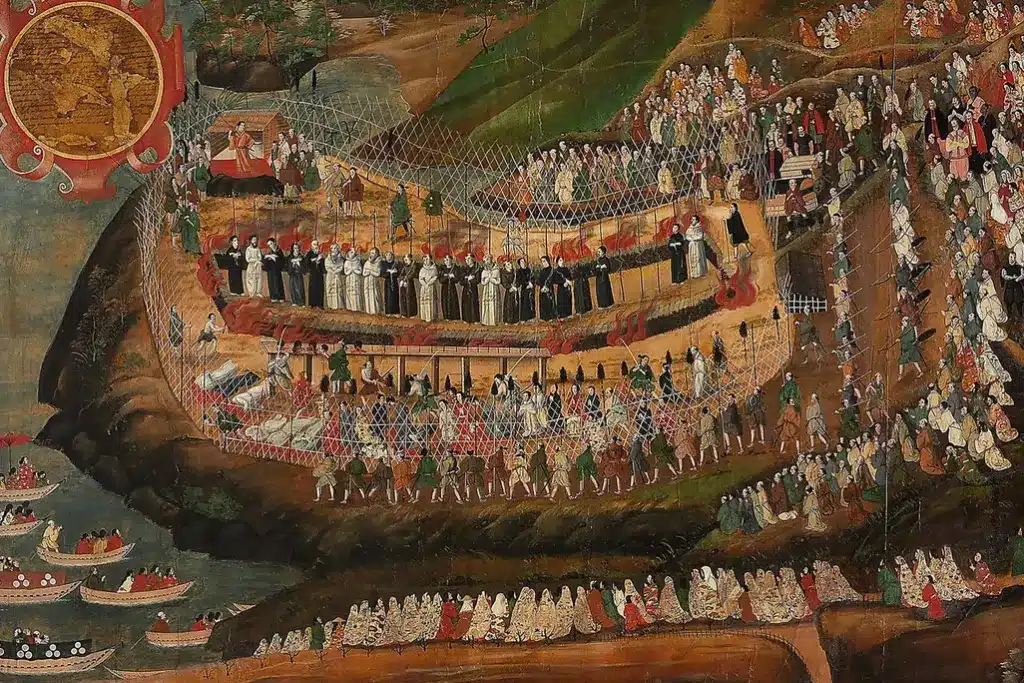
Japan has had a history of intense political fragmentation, and its relationship with global trade networks and even outside contact in general has been tenuous. In the mid-sixteenth century, Christianity’s appearance inside Japan was inextricably tied to these facts. While the religion initially surged thanks to the support of powerful allies like Oda Nobunaga, it later faced challenges so severe that the community seemingly vanished from the country entirely.
Thus, the history of Christianity in Japan is marked by dramatic, unpredictable shifts that made adherence challenging and, sometimes, life-threatening.
Considerations such as political loyalty and the disdain of foreign influence exerted intense pressure on the church, and early missionaries shared both optimism and confusion about the future of Christianity in the country.
Francis Xavier, later sainted, said of the Japanese people, “The people whom we have met so far are the best that have yet been discovered… They are of good will, and eager to learn.” This initial hope that Japan might become a major center of Christianity in Asia was soon tempered, and the Tokugawa dynasty eventually saw any hope of Christian dominance snuffed. To understand why Christianity remains a significant minority in Japan, we must first trace the complicated path it took to get there.
Japanese Religion Prior to Christianity
Japan has never been a religious monolith, and its belief systems differ from many standardized sects the world over. The prevailing religion, Shintoism, focuses on the concept of “kami,” or spirits. The spirits of ancestors, animals, sacred places: all these and more largely make up a person’s awareness of the world.
Leave a Reply