The question of whether pork is considered red meat or white meat has sparked countless debates around dinner tables for years. Some people insist it’s white meat because of advertising campaigns and its lighter appearance when cooked, while others argue it belongs in the same category as beef and lamb. The confusion is understandable, but the scientific answer is much clearer.
From a nutritional and biological standpoint, pork is classified as red meat. Meat is categorized based on the amount of myoglobin—a protein that stores oxygen in muscle tissue. Animals such as pigs, cows, lambs, and goats have higher levels of myoglobin than poultry, which gives their meat its classification as red meat, regardless of how light or dark it appears after cooking.
The phrase “the other white meat” became widely recognized through a successful marketing campaign launched decades ago to encourage consumers to view pork as a lean alternative to beef. While certain cuts of pork, such as pork loin or tenderloin, are relatively lean and may resemble chicken when cooked, this advertising slogan did not change its official nutritional classification.
That doesn’t mean pork is unhealthy. Lean cuts can provide high-quality protein, B vitamins, zinc, and other important nutrients while containing less fat than many people expect. As with any meat, choosing lean cuts, limiting heavily processed products like bacon and sausage, and preparing pork with healthier cooking methods can make it part of a balanced diet.
So while the debate continues in many households, nutrition experts agree on the classification: pork is scientifically considered red meat. The confusion comes from its appearance and decades of memorable advertising, but its biological makeup places it firmly in the red meat category.
For generations, people have believed that a snake entering a home is a sign of good luck, bad luck, hidden treasure, or even a spiritual message. Stories like these continue to circulate on social media, leaving many homeowners wondering whether the appearance of a snake has a deeper meaning. In reality, the explanation is usually much simpler and based on the animal’s natural behavior.
Snakes often enter homes while searching for food, water, shelter, or a safe place to escape extreme weather. If a property has mice, insects, pet food, clutter, or small gaps around doors and foundations, it may become an attractive place for a snake to explore. Cooler indoor temperatures during hot weather or warmer spaces during cold seasons can also draw them inside.
Most snakes are not aggressive and will try to avoid people whenever possible. Many species are harmless and actually play an important role in controlling rodent populations. However, because some snakes can be venomous depending on the region, it is important not to assume a snake is harmless based solely on its appearance. Keeping a safe distance is always the best approach.
If you discover a snake indoors, avoid attempting to handle or corner it. Keep children and pets away, close off the room if possible, and contact local animal control or a licensed wildlife removal service if the snake cannot leave safely on its own. Sealing entry points around the home and reducing food sources such as rodents can also help prevent future visits.
Despite many popular myths, a snake entering your house is not a reliable sign of fortune, danger, or supernatural events. More often than not, it simply means the animal found an opening and was searching for the basic necessities of survival, just as any wild creature would.
Water is essential for nearly every function in the human body, from regulating temperature to supporting digestion and helping transport nutrients. Even mild dehydration can affect how you feel and perform throughout the day. Because the early signs are often subtle, many people don’t realize they simply need to drink more fluids.
One of the first symptoms of dehydration is increased thirst, often accompanied by a dry mouth or sticky feeling inside the mouth. Other common signs include darker-colored urine, urinating less frequently than usual, fatigue, headaches, dizziness, and difficulty concentrating. These symptoms may become more noticeable after exercise, during hot weather, or when you’re ill.
As dehydration becomes more significant, the body has a harder time maintaining normal functions. Some people may experience muscle cramps, dry skin, constipation, or a faster heartbeat. In severe cases, dehydration can lead to confusion, fainting, low blood pressure, or heat-related illnesses that require prompt medical attention.
The amount of water each person needs varies depending on age, body size, activity level, climate, and overall health. While there is no single amount that is right for everyone, staying hydrated by drinking water regularly and paying attention to your body’s thirst signals is generally a good approach. Foods with high water content, such as fruits and vegetables, can also contribute to your daily fluid intake.
Recognizing the signs of dehydration early can help you prevent more serious health problems. Making hydration a regular habit supports normal body function, helps maintain energy levels, and allows your organs to work efficiently throughout the day.
Jennifer knew the moment she stepped into the ballroom that every camera would be pointed in her direction. Instead of choosing a custom designer gown costing thousands of dollars, she surprised everyone by wearing a simple blush-colored dress that looked remarkably similar to one sold on Temu. Within hours, whispers filled the room, and by the next morning, critics were mocking her fashion choice as if it were a national scandal.
The comments grew harsher throughout the day. Some questioned why the wife of a high-profile public figure would wear what they believed was an inexpensive dress to such a prestigious event. Others accused her of lowering the standard expected at one of Washington’s most glamorous evenings. Jennifer remained silent while the criticism continued to spread, refusing to defend herself before anyone knew the full story.
A few days later, she finally explained why she had chosen the gown. Months earlier, she had quietly pledged to donate the money she would have spent on an expensive designer dress to a charity supporting military families facing financial hardship. Rather than making a public announcement, she wanted the donation to remain private. She believed that spending thousands on a dress she would wear once made little sense when that money could help families in need.
Her explanation changed the conversation almost overnight. Many of the same people who had criticized her began praising her decision, admitting they had judged her too quickly. Others were inspired by the idea that elegance does not have to come with an extravagant price tag and that generosity can matter far more than a designer label.
Jennifer never intended to start a debate about fashion. She simply wanted her actions to reflect her values rather than public expectations. In the end, the dress that drew so much backlash became a reminder that appearances rarely tell the whole story, and kindness often speaks louder than luxury.
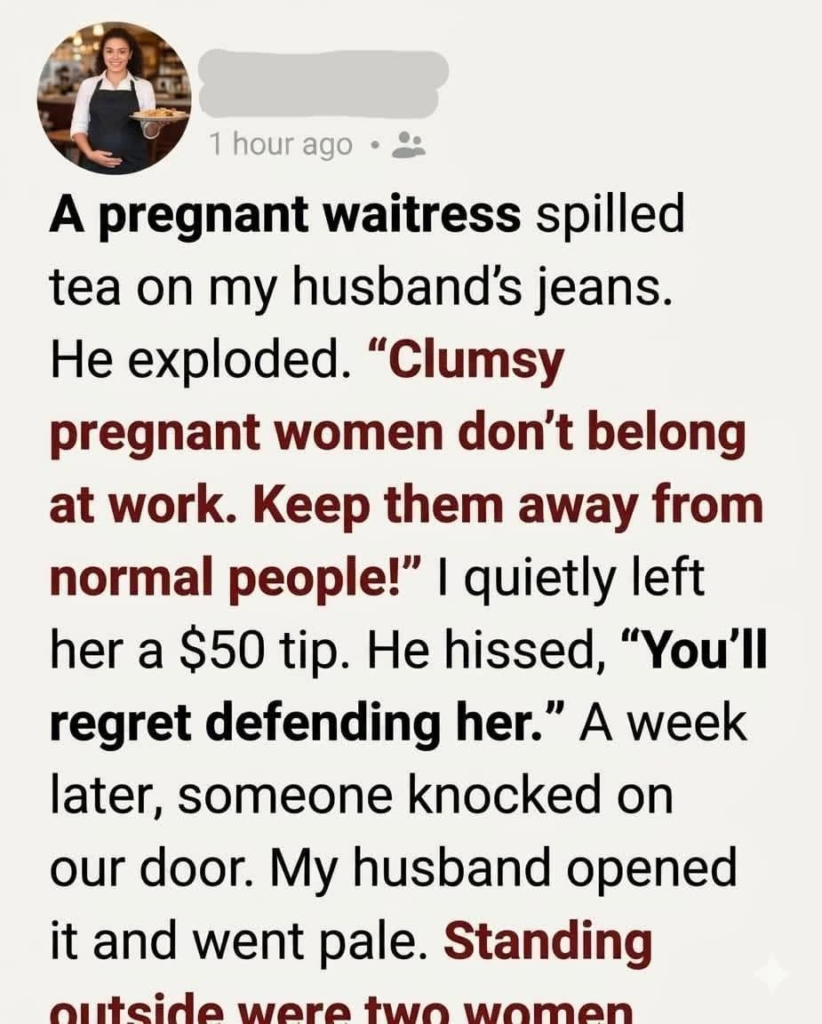
The restaurant fell silent the moment the cup slipped from the waitress’s hand. A splash of hot tea landed across my husband’s jeans, and before the young pregnant waitress could finish apologizing, he was already shouting loud enough for everyone to hear. “Clumsy pregnant women don’t belong at work. Keep them away from normal people!” His words cut through the room like a knife. The woman stood frozen, fighting back tears as she repeatedly apologized. Before we left, I quietly slipped a $50 bill into her hand and whispered that accidents happen to everyone.
On the drive home, my husband was furious that I had defended her. He insisted I had embarrassed him by taking her side and warned that I would regret it. I refused to argue, but something about the cruelty he had shown toward a frightened young woman stayed with me. I couldn’t stop thinking about the look on her face as she thanked me through tears.
Exactly one week later, someone knocked on our front door. My husband opened it confidently, but the color immediately drained from his face. Standing outside were two women. One was the pregnant waitress. The other introduced herself as the owner of the restaurant. She calmly explained that several customers had recorded the entire incident and that the video had spread through the community. She had come not for revenge, but to return the $50 tip because the waitress wanted me to know my kindness had helped restore her faith in people.
Before leaving, the restaurant owner handed my husband an envelope. Inside was a notice informing him that the company where he worked had canceled its annual business banquet at the restaurant after seeing the footage. Several local organizations had also decided they no longer wished to do business with someone whose behavior reflected such open disrespect toward others. For the first time since I had known him, he had nothing to say.
Watching those two women walk away, I realized the biggest lesson had nothing to do with spilled tea. Accidents can be cleaned up in minutes, but cruel words often leave stains that last much longer. Compassion had quietly won where anger had failed, and my husband finally understood that respect is something no one can demand—it must be earned.
When I was cleaning my son’s room, I noticed a tiny white plastic stick tucked behind a stack of books. It looked like some kind of strange device, but there were no buttons, charging ports, or wires anywhere on it. My imagination immediately started running wild, and I wasn’t sure whether I had discovered something completely harmless or something I should be concerned about.
Instead of confronting him without knowing the facts, I decided to do a little research on my own. After comparing it with several common household items, I discovered that the object closely matched the design of a personal nasal inhaler. These small inhalers are often carried in a pocket or backpack and contain menthol, eucalyptus, or other aromatic ingredients that help people feel like they can breathe more comfortably.
Many teenagers and adults use them during allergy season, when they have a cold, or simply because they enjoy the refreshing sensation. They do not require batteries or electricity, and they work by releasing scented vapors when someone inhales through the small opening. They are inexpensive, widely available, and are designed to be used multiple times before being discarded.
Finding one in a bedroom is usually no different than finding lip balm, tissues, or a pack of gum. While it’s always reasonable for a parent to ask questions about unfamiliar items, this particular object is commonly associated with personal wellness rather than anything suspicious. A calm conversation is often the best way to clear up any uncertainty.
In the end, I felt relieved to learn that the mysterious white stick was simply a nasal inhaler designed to provide a cooling, refreshing sensation and temporary relief from stuffy noses. What first seemed mysterious turned out to be an ordinary everyday item that many people use without giving it a second thought.
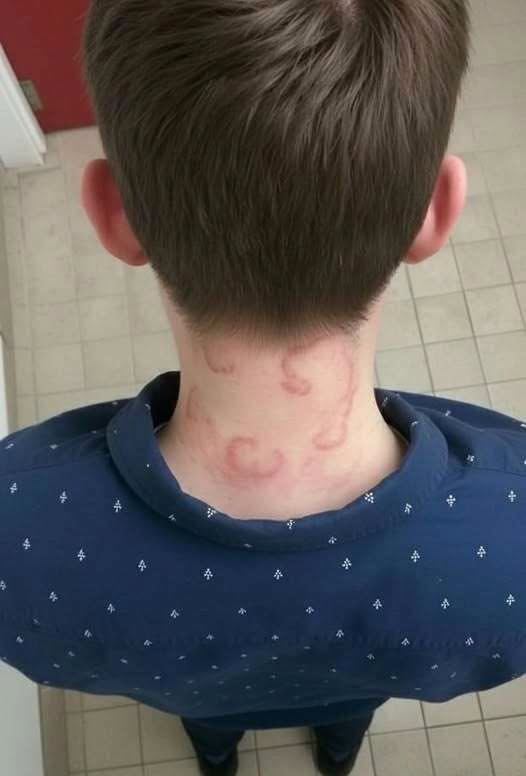
When the strange red rings first appeared on my 8-year-old’s neck, I assumed they were simple bug bites or a minor skin irritation that would disappear within a few days. Instead, the marks slowly became more noticeable over the next two months, leaving me increasingly worried as they refused to fade despite keeping the area clean and trying gentle skincare products.
After scheduling an appointment with a dermatologist, we finally learned that the rash had the appearance of tinea corporis, more commonly known as ringworm. Despite its name, ringworm is not caused by a worm at all. It is a fungal skin infection that can spread through close contact with infected people, pets, shared towels, clothing, or contaminated surfaces.
Ringworm often begins as a small red patch before expanding into a circular or ring-shaped rash with a clearer center. It can become itchy, irritated, and continue to spread if left untreated. Children are especially susceptible because they frequently share sports equipment, school supplies, and play closely with friends and pets, making transmission relatively easy.
Fortunately, most cases respond well to antifungal creams prescribed or recommended by a healthcare professional. More widespread or stubborn infections may require oral antifungal medication, and it’s also important to wash clothing, bedding, hats, and towels regularly to reduce the chance of reinfection. Family members and household pets should also be checked if similar symptoms develop.
The experience reminded us not to ignore skin changes that persist or gradually worsen over time. Although the rash looked alarming after two months, identifying it as a fungal infection allowed us to begin the proper treatment and greatly improved the chances of a full recovery.
The front door had barely closed behind the last guest when dinner took a painful turn. Cassidy sat quietly at the end of the table while her former mother-in-law, Diane, continued making sarcastic remarks about her appearance and financial situation. Brendan, Cassidy’s ex-husband, laughed along with his girlfriend, Jessica, who added several unkind comments of her own. Then, in an act that stunned everyone present, Diane dumped a bucket of icy, dirty water over Cassidy’s head, claiming it would finally make her “look presentable.” The room erupted with laughter as Cassidy sat motionless, soaked from head to toe, refusing to respond to the humiliation.
For years, Cassidy had endured disrespect from the Morrison family without revealing the truth about her life. They believed she was struggling financially and had contributed nothing to their success. In reality, she had quietly built a thriving business empire long before meeting Brendan. Through a carefully structured ownership agreement, she remained the undisclosed majority owner of the corporation where every member of the Morrison family proudly held executive positions. She kept her identity private because she wanted to be judged by her character rather than her wealth.
Family
As the cold water dripped onto the floor, Cassidy gently rested a hand on her pregnant stomach and took a slow breath. She realized this moment marked the end of years of silence. Instead of arguing or defending herself, she calmly reached for her phone. Her steady expression confused everyone at the table. Brendan smirked, assuming she was calling a friend for emotional support, while Jessica joked that someone should hand Cassidy a towel before she damaged the expensive furniture.
Cassidy quietly called Arthur, the company’s Executive Vice President of Legal Affairs. He answered immediately, sensing from her voice that something serious had happened. Without raising her voice, Cassidy simply said, “Please activate Protocol 7.” Arthur paused for a moment before carefully confirming her instructions. He reminded her that carrying out the protocol would immediately trigger executive employment reviews, suspend access to company systems, and begin a comprehensive financial compliance audit affecting several senior managers. Cassidy calmly confirmed that the process should begin.
The laughter around the table slowly faded as Brendan overheard parts of the conversation. He mocked the mysterious “protocol,” convinced it was nothing more than an empty threat. Diane poured herself another glass of wine and dismissed Cassidy’s phone call as attention-seeking behavior. None of them understood that the company’s legal department had already begun following established corporate procedures designed to protect shareholders whenever credible concerns required an immediate internal review.
Only minutes later, several professionally dressed members of the company’s legal and corporate security departments arrived at the property. Their calm, respectful manner immediately changed the atmosphere inside the house. The lead attorney addressed Cassidy by her full legal name and confirmed that her instructions had been received. Brendan’s expression shifted from confidence to confusion as he recognized several senior executives who normally answered only to the company’s ownership group.
The legal representatives explained that, under corporate governance policies, temporary administrative actions were being implemented while an independent audit reviewed company records. Executive access badges were suspended, financial authorizations were temporarily frozen, and several Morrison family members were placed on administrative leave pending the outcome of the investigation. Every document was presented professionally and in accordance with company policy, leaving no room for argument or emotional confrontation.
Family
Only then did the Morrison family begin to understand the truth. Cassidy calmly explained that she had quietly remained the company’s majority owner throughout the years. Every major investment, office renovation, executive appointment, and long-term business decision had ultimately required her approval. She had never hidden her identity to deceive anyone but had chosen privacy because she believed leadership should be measured through responsibility rather than public recognition. Unfortunately, the respect she had extended had never been returned.
The room fell silent as the legal team completed its work. Diane looked around in disbelief while Brendan struggled to process how completely he had misunderstood the woman he had underestimated for so many years. Cassidy never celebrated their embarrassment or sought revenge. She simply stated that every employee deserved to be treated with dignity and that professionalism, integrity, and respect would always matter more than titles or appearances. The independent audit would determine any future employment decisions fairly and according to established corporate procedures.
Cassidy quietly gathered her belongings and walked toward the front door with renewed confidence. She chose to leave behind years of disrespect and focus instead on building a peaceful future for herself and her growing family. The experience reminded everyone present that genuine leadership is demonstrated through patience, fairness, and accountability—not arrogance or wealth. As the evening came to an end, Cassidy stepped into the fresh night air knowing she had protected both her family’s future and the values upon which her company had always been built.
Many people have experienced the simple surprise of spotting a coin on the ground during an ordinary day. Most of us pick it up without giving it much thought, while others leave it where it is. Yet across cultures and generations, this small moment has often been viewed as more than a lucky find. Rather than seeing it as something valuable in itself, many traditions consider it a gentle reminder to slow down, notice your surroundings, and appreciate life’s unexpected moments.
Throughout history, coins have represented more than money. They have symbolized prosperity, gratitude, generosity, and hope. Ancient customs in many parts of the world associated found coins with positive change or encouragement during difficult times. While these beliefs differ from culture to culture, they share one common idea: everyday experiences can inspire reflection and optimism if we choose to pay attention to them.
Some people believe that discovering a coin serves as a comforting reminder of loved ones who have passed away. Others simply see it as an opportunity to remember someone special or reflect on meaningful memories. These interpretations are deeply personal and vary from individual to individual. Whether viewed through a spiritual, cultural, or emotional lens, the experience often encourages gratitude rather than fear.
For many, finding a coin can also represent the possibility of new beginnings. It may serve as a symbolic reminder to remain open to opportunities, approach challenges with confidence, or embrace positive change. While there is no evidence that a found coin predicts future events, its unexpected appearance can motivate people to adopt a more hopeful outlook and remain attentive to possibilities they might otherwise overlook.
Perhaps the most meaningful part of the experience is not the coin itself but the pause it creates. Taking a brief moment to appreciate something unexpected can shift your attention away from daily stress and toward the present. Practicing gratitude, even for small moments, has been linked to improved well-being and a greater sense of perspective. In this way, the coin becomes a personal reminder to focus on what is going well rather than only on life’s difficulties.
Modern life often moves at a relentless pace, making it easy to overlook the small details around us. Between work, technology, and constant responsibilities, moments of quiet reflection can become rare. A simple discovery, such as noticing a coin on the sidewalk, may encourage us to slow down, take a deep breath, and reconnect with the present moment. Sometimes the smallest interruptions are the ones that help us regain our sense of balance.
Whether you choose to keep the coin, donate it, or simply smile before continuing on your way, the experience can carry a positive message. It can remind you to stay hopeful, appreciate everyday blessings, and recognize that meaningful moments often arrive without warning. Small acts of awareness and gratitude can gradually shape a more optimistic outlook on life.
The next time you notice a coin glimmering on the ground, consider it an invitation to pause for a moment. You don’t have to believe in luck or hidden meanings to appreciate the experience. Sometimes an ordinary object is enough to remind us to be present, thankful, and open to the possibilities each new day brings. In that sense, the greatest value of a found coin may not be its monetary worth, but the thoughtful moment it inspires.
Severe weather recently affected coastal waters near the impacted region, where two powerful marine storms brought strong winds, heavy rainfall, and rough seas within a short period. The sudden change in conditions created dangerous circumstances for anyone on or near the water, prompting authorities to closely monitor the situation and issue public safety advisories.
As the storms moved across the coastline, waves grew significantly larger and visibility was reduced by heavy rain. Local officials urged fishermen, recreational boaters, and commercial vessels to postpone trips until weather conditions improved. Several ports also introduced temporary restrictions to help protect both crews and equipment.
Emergency management agencies worked alongside maritime authorities to assess conditions throughout the affected area. Patrol teams monitored coastal waters, while rescue units remained on standby in case assistance was needed. Officials emphasized that preparedness was essential, even though no widespread injuries had been confirmed at the time of the latest updates.
Forecasters warned that unstable weather could continue for several hours, with the possibility of additional rainfall, gusty winds, and localized flooding in low-lying coastal communities. Residents living near beaches, rivers, and harbors were encouraged to remain alert and monitor changing conditions as forecasts were updated.
Transportation across the water experienced disruptions as rough seas made travel unsafe. Ferry services and some marine operations were temporarily suspended, while shipping companies adjusted schedules to reduce risks. These precautionary measures were taken to protect passengers, crews, and vessels from hazardous conditions.
Local governments also reminded residents to secure outdoor furniture, boats, and other items that could be damaged or displaced by strong winds. People were encouraged to avoid sightseeing along the shoreline, as large waves and unpredictable currents can pose serious dangers even after the heaviest rain has passed.
Emergency responders continued coordinating with weather experts to track the storms and identify areas that might require additional support. Crews remained prepared to respond quickly if flooding, stranded vessels, or other weather-related incidents developed as conditions evolved.
Authorities stressed that public cooperation would play an important role in maintaining safety during the severe weather event. Residents and travelers were advised to rely on official weather forecasts and emergency announcements before making travel plans, and to wait until conditions had clearly improved before returning to coastal or marine activities.