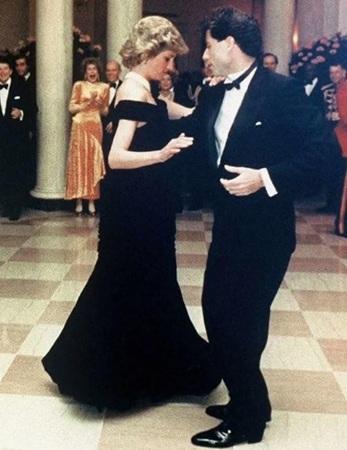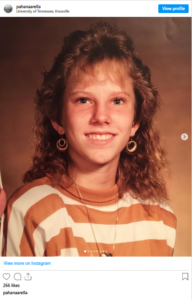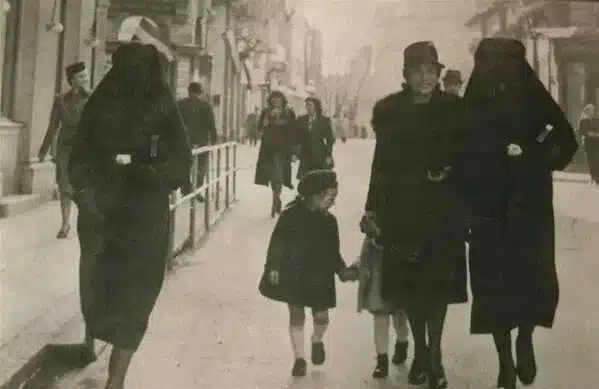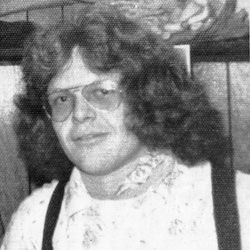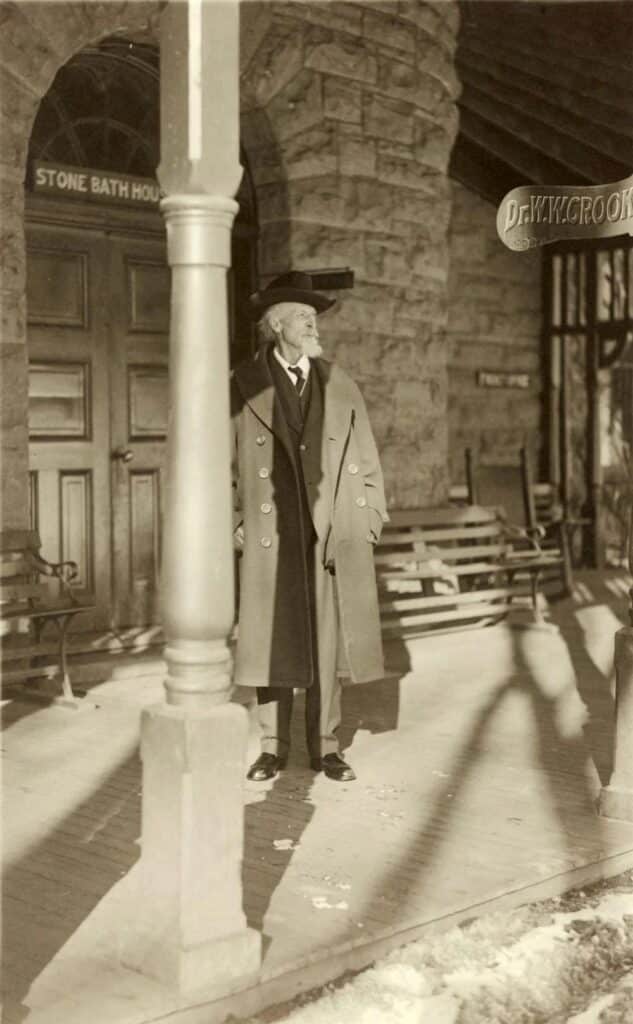
Pin-up artists and pin-up models became a cultural phenomenon starting in the early 20th century. The style is characterized by images of beautiful women, usually wearing bathing suits or glamorous clothing, striking poses that highlight their features.
The term pin-up refers to the use of these pictures and drawings to be pinned up on walls in an informal display. They also appeared often during war times as a morale boost. They often appeared in calendars or as postcards.
Many glamour and fashion models of the era became pin-up stars. Photoshoots often contained the models performing tasks, posing in bathing suits, or lounging. All in position that accentuated their features.
Much of the style of pin-up photoshoots and art comes from early burlesque performers such as Josephine Baker. Some of the most famous pin-up models of the era were Bettie Page and Betty Grable. Betty Grable’s post cards became a common decoration in many World War II soldiers’ bunks.
Let’s take a look at some of the most iconic pin-up models of the time, including some art of the famous pin-up art that was created.
A sunny beach afternoon quickly turned frightening when a large dark shape was spotted moving through the shallow water. Some beachgoers first thought it might be a dolphin, but lifeguards quickly recognized the danger and realized a shark was swimming close to people in the oce…Continue Reading
Sirens sounded and lifeguards ordered everyone out of the water immediately. Families rushed toward the shore, parents grabbed their children, and people abandoned towels and beach toys as panic spread across the sand.
Thankfully, no one was injured. The shark did not appear to attack or act aggressively, and after moving through the shallows, it eventually turned back toward deeper water. Still, the close encounter left many people shaken.
The incident served as a strong reminder that the ocean is a wild environment, even on peaceful vacation days. Lifeguard warnings, flags, and safety instructions should always be taken seriously, because they can make the difference between a scary moment and a tragedy.
Reports claim Iran has used cluster munition warheads in strikes targeting areas including Tel Aviv, raising international concern. These weapons are controversial because they can spread explosives over wide areas and create serious risks for civili…Continue Reading
Iranian officials described the attacks as retaliation for the killing of a senior security official, which they blame on Israel. Israeli defense systems have intercepted many incoming projectiles, but analysts warn that repeated large-scale attacks could increase pressure on those defenses.
The conflict has reportedly expanded beyond Israel and Iran, with attacks involving U.S. military sites and partner locations across the Gulf. This has drawn Washington more directly into the crisis and increased fears of a wider regional confrontation.
Civilian safety, energy markets, and diplomatic efforts are all under growing strain. Observers warn that without de-escalation, the conflict could cause severe humanitarian, economic, and geopolitical consequences far beyond the Middle East.
I spent two weeks in the hospital recovering after surgery, and my husband did not come to see me once.
Not one visit.
Not one nervous face appearing in the doorway.
Not one warm hand reaching for mine when the pain became too much.
He answered my messages. He picked up my calls. But every time I asked why he was not there, he gave me the same vague promise…. Continue Reading
“I’ll explain soon. Just focus on getting better.”
By the time I was discharged, I had already prepared myself for the worst.
Then I opened our front door and forgot every speech I had rehearsed.
Rowan and I had been married for twenty years. Long enough to finish each other’s thoughts. Long enough to survive lean years, grief, family arguments, job losses, and all the quiet disappointments that test a marriage slowly.
That was why his absence made no sense.
A few weeks earlier, a brutal pain in my stomach had sent me to the hospital. After urgent tests, the doctors found a serious condition that required immediate surgery.
The days before the operation were frightening, but Rowan stayed beside me through all of it.
On the morning of surgery, my hands shook so badly that I could not hide it. He sat on the edge of my hospital bed and wrapped his fingers around mine.
“I’m terrified, Ro,” I whispered.
He bent close, his face pale but steady.
“You are the strongest woman I know,” he said. “I am not going anywhere.”
Nurse Clara stepped in with a gentle smile and tried to reassure us both.
“Dr. Evans is the best surgeon we have, Beverly.”
Rowan immediately looked at her.
“Will someone come get me as soon as she’s out?”
“The moment she’s safely in recovery,” Clara promised. “I’ll come find you myself.”
Rowan kissed my forehead.
“Three hours,” he whispered. “And I’ll be the first thing you see when you open your eyes.”
“You swear?”
“On my life,” he said. “I’ll even have your terrible hospital coffee waiting.”
Then they rolled me into the operating room.
But recovery did not go as planned.
Complications kept me unconscious longer than expected. When I finally floated back toward awareness, my throat burned, my head throbbed, and every part of me felt heavy.
“Rowan?” I rasped.
A soft voice answered.
“It’s Nurse Clara. You’re in the recovery wing now.”
I turned my head weakly.
“Where is my husband?”
Clara hesitated.
Only for a second.
But I noticed.
“He isn’t here right now.”
My heart sank.
“He promised,” I whispered. “He swore on his life.”
Clara touched my arm gently.
“We checked the waiting room. It was empty.”
With shaking hands, I called Rowan.
He answered on the third ring.
“Beverly,” he said, his voice low and worn.
“Where are you?”
“I’m okay,” he said quickly, as if that was supposed to comfort me. “I’ll explain soon. Just focus on getting better.”
“Rowan, I almost died.”
Silence filled the line.
Then he whispered, “I know.”
And said nothing else.
That became the pattern for thirteen more days.
Brief texts.
Short calls.
Unclear answers.
The same promise that he would explain everything soon.
I spent long nights staring at photos of our house on my phone, wondering if I would even recognize my marriage when I returned to it.
Nurse Clara became the person who kept me steady.
She brought my medication in the evenings and lingered a few extra minutes, asking questions she did not really need answered just so I would not have to talk to the ceiling.
One night, she looked toward the empty chair beside my bed and sighed.
“He was so devoted before surgery,” she said quietly. “Something must have frightened him terribly.”
“Or someone,” I said.
She turned to me.
“Do you believe that?”
I stared down at a photo of our home on my phone.
“I don’t know what I believe anymore.”
By the morning I was discharged, I had rehearsed the confrontation so many times that it had become organized in my mind.
The questions had an order.
The excuses I would not accept had already been rejected.
After twenty years of loyalty, Rowan had disappeared when I needed him most.
I had become very quiet and very certain about what I would say.
Then I opened the front door.
And every word vanished.
The hallway was different.
Beautifully different.
The floral wallpaper we had complained about for ten years was gone. In its place was fresh warm paint, the exact soft yellow I had once pointed to in a magazine before telling myself it was too expensive, too indulgent, not necessary.
The flickering light fixture from our second winter in the house had been replaced with something simple and perfect.
The kind of thing I would have chosen if I had ever allowed myself to choose it.
I stood in the doorway, unable to speak.
Then I stepped farther inside.
The warped hallway floorboard that had caught my toe every morning for eleven years had been repaired so smoothly I almost missed it.
The crack across the living room ceiling, the one we had watched spread slowly over three winters, was gone. The entire ceiling had been replastered and painted.
And on the wall where we had always said we would someday build shelves, there were shelves now.
Real ones.
Strong.
Level.
Filled with our books as if our home had finally remembered what it was meant to become.
I ran my fingers along the wood and tried to make sense of what I was seeing.
In the kitchen, the dark cabinets that had made the room feel like a cave were gone. The broken drawer I had asked Rowan to fix for nearly a decade had been replaced. The countertop was new.
The whole kitchen looked bright.
Open.
Alive.
On the marble island sat a folded index card in Rowan’s familiar handwriting.
I picked it up.
“You were right about the yellow. It does look like morning.”
I read it twice.
Then I stood there holding the note while my anger slowly lost its shape.
In our bedroom, the walls had been painted the warm white I had wanted since the day we moved in.
Another card waited on the nightstand.
“The good pillow is yours. It was always supposed to be yours. I don’t know why it took me this long.”
I sat down on the edge of the bed.
Beside his desk, I found one of Rowan’s work shirts in a pile on the floor. The fabric was stiff with paint stains that had not been there before my surgery.
On the desk was a stack of contractor invoices, hardware receipts, plumbing bills, and paint samples.
Every date fell inside the two weeks I had spent in recovery.
Rowan had not been home doing nothing.
He had been here.
Working.
Every single day.
Then I saw the reading nook.
Years earlier, I had sketched one on graph paper and hidden it away in a drawer because it felt too impractical to ask for. A cushioned bench beside the window. Low shelves. The perfect angle for afternoon light.
Now it existed.
Exactly as I had drawn it.
On the cushion sat another card.
“You showed me this sketch in 2009, and I kept the paper. I always knew where it was.”
My eyes burned.
I walked into the garage.
The workbench was buried under tools, empty boxes, sawdust, and hardware packaging. It was the kind of mess that could only come from relentless, desperate effort.
But the mess was not what stopped me.
On the corner of the workbench sat three sealed plastic bags, tags still attached.
I reached inside one and pulled out a stuffed bear with a bow around its neck.
There was also a get-well card with a ribbon on the front and a small box of chocolates.
A receipt had been stapled to the bag.
The store name was the hospital gift shop.
The date was three days after my surgery.
Rowan had been there.
He had entered the hospital.
He had bought gifts.
But he had never reached my room.
I stood in the garage with the stuffed bear in my hands and pictured him walking through that lobby, close enough to buy me a card and chocolates, but somehow unable to walk through my door.
For two weeks, I had believed he had not cared enough to come.
Now I was beginning to understand something far more painful.
Maybe he had cared so much that fear had trapped him in place.
My anger loosened, though I was not ready to let it go completely.
I placed the bear back on the workbench and smoothed its bow.
Then I saw one last note taped to the back door.
“Come outside. I’m sorry it took me this long to be ready.”
I opened the door.
The garden had been cleared and replanted. The broken gate had been rehung. A stone path stretched from the back door toward a small glass-and-cedar structure I had never seen before.
The sunroom.
The one Rowan had promised me since the year we got married.
Every time I described it, he would listen and say, “One day, Bev. It’s going to be beautiful.”
On the doorframe, at eye level, another card waited.
“You described exactly this when we were thirty-one. I remembered everything.”
I stood there for a moment before pushing the door open.
Rowan was inside.
Asleep in a folding chair.
His head tipped back.
His arms still inside a shirt covered with dried paint.
Blueprints, receipts, and tools surrounded him like evidence of a man who had been working without stopping.
I touched his shoulder.
He jolted awake.
For one second, relief crossed his face.
Then he saw my expression.
“Bev?”
“Two weeks,” I said. “Rowan, two weeks.”
He stood slowly.
I stepped back because I was not ready for him to touch me.
“I know,” he said.
“You promised me you’d be there when I woke up. You promised on your life.”
He did not deny it.
He did not reach for an easy excuse.
He sat back down, rested his forearms on his knees, and told me the truth.
He had come to the hospital the morning after surgery.
At the desk, a nurse told him there had been complications. He found my room, stood in the doorway, and saw the machines, the tubes, my pale face, and the monitors keeping track of every fragile breath.
He said he had never felt fear like that in twenty years of marriage.
So he turned around.
He went back to the elevator.
Then he sat in the parking garage for two hours.
That night, he drove home but could not make himself go inside, so he slept in his truck in the driveway.
The next morning, he drove back again.
He made it to the lobby.
He sat near the entrance for forty minutes.
Then he left.
“I tried every day,” he said, his voice breaking. “Some days I got farther than others.”
He looked down at his hands.
“Once, I made it to your floor. I could see the nurses’ station from the elevator. I stood there for maybe a minute, and then I left.”
He swallowed.
“I bought the gifts on the third day. I thought if I had something to bring you, I could make myself go in.”
His eyes moved toward the garage.
“I couldn’t.”
I felt tears rising, hot and unwanted.
“I knew it was wrong,” he continued. “Every day, I knew it was wrong. But I couldn’t go back into that room and see you like that and not be able to fix it.”
“So you fixed the house instead,” I whispered.
He looked at me then.
“It was the only thing I could do.”
The room went quiet.
Then he said, “We’ve been saying ‘one day’ for twenty years, Bev. When I saw you in that hospital bed, I kept thinking, what if there is no one day? What if I wasted all the time we thought we had?”
I looked around the sunroom built from fear, guilt, love, and desperation.
I thought about the yellow hallway.
The repaired floorboard.
The kitchen note.
The reading nook sketch he had kept since 2009.
The stuffed bear still sitting in the garage.
He had not disappeared because he did not care.
He had disappeared because terror had turned him into someone who did not know how to show up in the way I needed.
“We were both terrified,” I said finally. “Just in completely different ways.”
He nodded, tears in his eyes.
“I’m sorry,” he whispered. “I should have been there.”
“Yes,” I said.
Because love did not erase the hurt.
But truth softened the edges of it.
I sat down across from him.
Beyond the glass, the newly planted garden glowed gold in the evening light.
For a while, neither of us spoke.
And somehow, that silence became part of the answer.
Weeks later, we sat in those same chairs in the warm afternoon sun.
The garden had started blooming.
The reading nook had become my favorite place in the entire house.
Nurse Clara had visited twice, and both times Rowan made her coffee and asked about her patients by name.
Because that was the kind of man he was.
The kind I had almost forgotten during two weeks of fear and silence.
One afternoon, I looked around the sunroom and asked, “What happens now, Ro?”
He glanced at the garden.
At the glass walls.
At the life we had spent twenty years treating like something waiting in the distance.
Then he reached across and took my hand.
“We stop saying one day,” he said. “We start now.”
Outside, the garden did exactly what we had always hoped it would do.
There were nights when I lay awake wondering if I was doing enough.
If I had said the right thing.
If I had missed something important.
If love could make up for all the things I didn’t know how to do.
Advertisements
But when I look back now, everything that became my life can be traced to one ordinary October night, when I came home exhausted and nearly tripped over three car seats on my porch…. Continue Reading
The porch light was flickering, casting a weak yellow circle across the wooden boards. I had just finished a double shift at the hardware store, smelling of sawdust, oil, and old keys, with my apartment keys already in my hand.
Then I saw them.
Three car seats.
One diaper bag.
And a note scribbled on the back of a gas receipt.
For a few seconds, I couldn’t look at the babies. My brain refused to understand what my eyes were seeing, so I picked up the note first.
My brother Daniel’s handwriting leaned sharply to the right, just like always.
“I’m sorry, Noah. I can’t do this.”
That was all.
No phone number. No address. No explanation.
Daniel’s wife, Patricia, had been buried eleven days earlier. My brother had lasted less than two weeks before running from the three tiny lives she left behind.
I was twenty-seven, unmarried, and living in the apartment above the hardware store where I swept floors and cut keys. I had $312 in my checking account, one broken futon, and absolutely no idea how to raise a baby.
Let alone three.
One of the triplets made a small sound, a soft, wet little hiccup, as if she was apologizing for needing anything.
I crouched down.
Two of the babies were sleeping, but the smallest one was awake. She stared up at me with gray eyes that looked exactly like my mother’s.
“Hey,” I whispered. “Hey, you.”
That was when Mrs. Hunter came out of the apartment next door in her bathrobe, slippers slapping against the walkway. She had lived beside me for six years and had never once minded her own business.
That night, thank God, she didn’t start.
“Noah?” she cried. “What in the world?”
I handed her the note.
She read it, looked at the babies, then pressed a hand to her chest.
“Where is he?”
“Gone,” I said.
Her face softened, then tightened with worry.
“Honey, you can’t raise three babies by yourself.”
“I know.”
“You don’t even know how to warm a bottle.”
“I know that too.”
She lowered herself beside me on the porch. I was ready to agree with her. I was ready to say I would call someone, that social services would know what to do, that there had to be better people somewhere. Ready people. Stable people.
Then the smallest baby lifted her tiny hand and wrapped her fingers around my index finger.
Her grip was warm, impossibly small, and stronger than anything I was prepared for.
I froze.
“That’s June,” Mrs. Hunter said quietly. “Patricia said the smallest one would always be June.”
“June,” I repeated.
The baby didn’t know I had no money. She didn’t know I had never changed a diaper. She didn’t know her father had just left her and her sisters on a porch like unwanted boxes.
She only knew someone was there.
Mrs. Hunter spoke gently.
“I’ll call social services in the morning. There are good families, Noah. People who know how to do this.”
I opened my mouth to say yes.
Instead, I looked at June’s fingers curled around mine and whispered, “Okay. Okay, I’ve got you.”
Mrs. Hunter went quiet.
The porch light flickered above us.
I carried the babies inside one at a time, and somewhere between the second trip and the third, I stopped being Uncle Noah and became something I didn’t yet know how to name.
Years passed the way hard years do, slowly while you are living them and all at once when you look back.
I packed lunches with the wrong bread.
I learned how to warm bottles, change diapers, check fevers, and braid hair badly enough that Mrs. Hunter had to fix it on the porch before school.
“You’re going to give those girls problems, Noah,” she once said, brushing knots out of Ava’s hair.
“I’m doing my best.”
“I know,” she said. “That’s what worries me.”
I worked double shifts at the hardware store. Sometimes triple shifts. There were braces to pay for, science fair boards to buy, shoes that somehow fit no one by the next month, and three growing girls who needed more than I ever seemed to have.
There were fevers I sat through in the dark.
There were school plays where I clapped too loud.
There were broken hearts I didn’t know how to fix, so I made grilled cheese sandwiches and let them cry on the couch.
There were years when all three of them seemed to hate me at once.
June slammed doors at thirteen.
Claire stopped speaking to me for nearly a month at fifteen.
Ava told me at seventeen that I didn’t understand anything.
She was right.
I didn’t.
But I stayed.
I missed things too.
A cousin’s wedding because Claire had the flu.
A fishing trip I had promised myself for ten years.
The chance to build a family of my own.
And Diana.
Diana was the woman I loved, and she waited longer than she should have.
One night, standing at my front door, she said, “I’m not asking you to choose, Noah. I’m asking if there’s room.”
I looked back into the apartment, where three girls were asleep behind three half-open doors.
“There isn’t,” I said. “Not the kind you deserve.”
She nodded like she already knew.
She left a sweater behind that night.
I never gave it back.
Daniel appeared over the years the way bad weather does, suddenly and never when wanted.
A birthday card with no return address.
A Christmas card from a city I had never visited.
When the girls were twelve, he called.
“I want to reconnect,” he said. “I’ve been thinking.”
“About what?”
“About them. About being their dad.”
I gripped the phone so tightly my hand cramped.
“If you want to be a dad, get on a plane. Don’t think about it on my phone bill.”
He never got on a plane.
Not once.
After that, even the cards stopped.
Sometimes I wondered if the girls noticed. They never said anything.
But I noticed everything.
At night, I counted worries instead of money.
Had I done enough?
Did they know I loved them?
Or did they only know I was tired?
And underneath every fear was the one I never admitted out loud.
Maybe, deep down, they were still waiting for their real father.
Maybe I was only the man who stayed because no one else did.
On the morning of their college graduation, I sat in my truck in the parking lot for twenty minutes before I could force myself to go inside.
I was forty-nine. My beard had gray in it. My knee still hurt from falling off a ladder two summers earlier, and I had a cheap camera in my hand that I barely knew how to use.
In my wallet, tucked behind an expired insurance card, I still carried Daniel’s original note.
“I’m sorry, Noah. I can’t do this.”
The words had faded, but they were still readable.
I wondered if the girls would mention Daniel that day.
Worse, I wondered if they wished he had come.
I folded the note carefully, put it back, and walked into the auditorium.
The place smelled like floor polish, perfume, and nervous families. I sat seven rows back, the camera resting on my bad knee, trying to keep my hands still.
Then my girls crossed the stage.
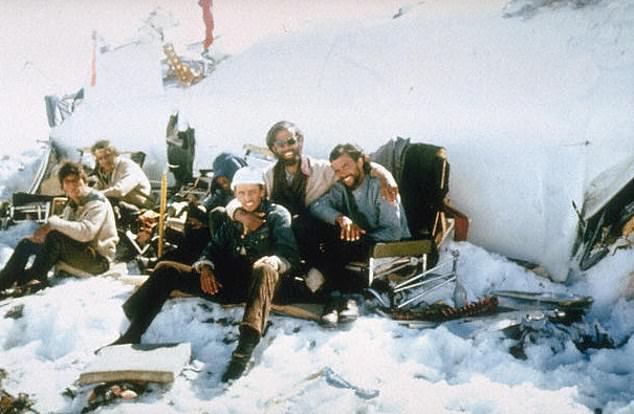
Ava went first, crying before her name had even finished echoing through the speakers. She wiped her face with the sleeve of her black gown and laughed at herself halfway across the stage.

Claire came next.
My wild card.
She found me in the crowd and waved with both hands, just like she used to do from the school bus window when she was eight. I waved back with everything in me.
Then came June.
She didn’t smile.
She walked across that stage the way she had moved through life, quietly carrying something heavy no one else could see.
I lifted the camera.
The shutter clicked.
That should have been the end.
Then the dean returned to the microphone.
My daughters came back onto the stage together, holding hands like they used to when they crossed parking lots as little girls.
Something tightened in my chest.
June stepped up to the microphone.
“Our father couldn’t be here today,” she said.
My stomach dropped.
Daniel.
They were going to speak about Daniel.
After twenty-two years of missed birthdays, unanswered responsibilities, and empty promises, they were going to honor the man who had left them behind.
I told myself to sit still.
To smile.
To let them have whatever they needed.
Then Ava pulled a folded paper from her sleeve, and Claire covered her mouth as her shoulders began to shake.
June continued.
“We found the notebook. The one in the kitchen drawer.”
My breath caught.
The notebook.
The one I had written in at birthdays, after fevers, after first steps, after nights when I was too afraid to say things out loud.
June began to read.
“To my girls. You’re one year old today. I don’t know if you’ll ever read this, and I don’t know if I’ll still be doing this right by then, but I wanted to write it down anyway.”
I knew those words.
I knew the man who had written them at a warped kitchen table above a hardware store while three babies slept in one crib because he couldn’t afford three.
That man was me.
June’s voice trembled.
“I’m twenty-seven. I’m scared all the time. I don’t know how to be a father, but I know I’m not going anywhere.”
My knees gave out before I realized I had moved.
Someone beside me caught my elbow and helped me back into the seat.
When June said “our father,” she hadn’t meant Daniel.
She meant me.
She had meant me all along.
Onstage, my daughter looked straight down the aisle at me and kept reading.
“I don’t know how to do this. I don’t know how to be what you need. But I’m going to stay. I’ll never be the dad you deserve, but I’ll be the one who shows up.”
Ava took over, her voice breaking.
“I promise you breakfast every morning, even if it’s burnt. I promise you’ll never wonder where I am.”
Then Claire read the final line.
“I love you more than I knew a person could love anything. Happy first birthday.”
The auditorium disappeared behind tears.
Then June came down the steps and knelt in front of me. She placed a framed document into my shaking hands.
“We filed the petitions months ago,” she said. “They went through last week.”
I couldn’t read it at first.
My hands were trembling too hard.
Ava spoke into the microphone.
“We found what our biological father left behind. But Noah was never just our uncle.”
Claire wiped her eyes.
“He was always our dad.”
The room rose to its feet.
I don’t remember standing. I don’t remember walking out. I only remember three young women holding me like I was the one who needed carrying.
Three weeks later, I stood in the apartment above the hardware store and hung two frames on the wall beside the window.
On the left, I placed Daniel’s gas receipt note.
On the right, I placed the adoption papers.
I stared at them for a long time.
For more than twenty years, I had called my life a sacrifice.
But standing there in the quiet, I finally understood the truth.
It wasn’t a sacrifice.
It was the life I had chosen.
And somehow, somewhere along the way, that life had chosen me back.
I sat on the couch, picked up my phone, and scrolled to a number I hadn’t called in twelve years.
Diana.
I pressed call before I could talk myself out of it.
She answered on the second ring.
For a moment, neither of us spoke.
Then she said softly, “Noah?”
I closed my eyes.
“Hi, Diana.”
Her voice changed, just enough for me to hear the years between us.
“Is everything okay?”
I looked at the wall.
At the note that had broken my life open.
At the papers that had put it back together.
And for the first time in a very long time, I smiled.
The story of a young woman named Ana has become a painful reminder of how dangerous it can be when serious symptoms are dismissed as “normal.” At just 20 years old, she should have been focused on her future, but instead spent her final months dealing with worsening health issues that were repeatedly underestimated.
Her experience has sparked renewed attention around women’s health awareness, early diagnosis, and the risks of normalizing severe pain.
At first, her symptoms didn’t seem unusual. She experienced cramping, fatigue, and general discomfort—things many young women are often told are part of everyday life. Like others in similar situations, she assumed it would pass. But instead of improving, the symptoms intensified. The pain became harder to manage, fatigue deepened, and dizziness started affecting her daily routine.
Even then, the situation wasn’t treated as urgent.
Advertisements
Health professionals often point out that this pattern reflects a broader issue—symptoms related to reproductive or abdominal health are sometimes minimized, leading to delays in proper diagnosis. In Ana’s case, that delay proved critical.
By the time she sought more serious medical attention, her condition had already progressed. Doctors later determined that the underlying issue had reached a severe stage, leaving limited options. Despite emergency treatment, she passed away in the hospital.
Her family has since spoken out, hoping to raise awareness about warning signs that should never be ignored. These include persistent or worsening pain, fainting, severe dizziness, and extreme fatigue—especially when symptoms don’t respond to standard treatments.
Medical experts emphasize that such signs can point to serious conditions like internal bleeding or complications involving reproductive organs. What may appear minor at first can quickly become life-threatening if left unchecked.
Ana’s case has also reignited discussion about what is often called the “pain gap”—a pattern where women’s symptoms are taken less seriously or investigated less aggressively. Research in healthcare has shown that this can lead to delayed diagnoses, particularly in cases involving abdominal or reproductive pain.
Because of this, there is growing emphasis on better education and awareness. Understanding when symptoms go beyond “normal” is essential. Severe pain, sudden changes, or symptoms that interfere with daily life should always be evaluated carefully.
The larger message is simple but important. Listening to patients—and taking their concerns seriously—can make the difference between early treatment and a crisis. Proactive testing and timely evaluation are key, especially when symptoms escalate.
Ana’s story is deeply tragic, but it has also become a call to action. Her family hopes that sharing what happened will encourage others to trust their instincts, seek help earlier, and push for proper medical attention when something doesn’t feel right.
In the end, her legacy is not just about loss, but about awareness—reminding people that persistent pain is never something to ignore, and that being heard in healthcare can save lives.
Madison Bennett turned twenty-seven surrounded by crystal glasses, soft candlelight, and waiters who moved like shadows through one of the most expensive restaurants in downtown Chicago.
But she had never felt more alone.
Her husband, Ethan, sat beside her in a sharp navy suit, looking every bit like the successful businessman everyone believed him to be. Every few minutes, his phone lit up, and every few minutes, he glanced down at it instead of looking at his wife…. Continue Reading
Across the table, Patricia Carter smiled at Madison with polished cruelty.
Advertisements
Ethan’s mother had perfected the art of making insults sound like compliments.
“Oh, Madison,” Patricia said sweetly, lifting her wineglass, “for someone who stays home all day, you actually managed to look decent tonight.”
Ethan gave an uncomfortable little laugh.
But he did not defend her.
He never did.
Madison lowered her gaze and forced a smile. It was the same smile she had worn for three years of marriage. The quiet smile. The obedient smile. The one that kept dinner parties peaceful and gave Patricia no reason to accuse her of being dramatic.
But beside Madison sat the one person who saw everything.
Her grandmother, Eleanor Bennett, sat straight-backed and elegant in a pearl-gray dress. Her silver hair was swept neatly back, and her calm eyes missed nothing. Eleanor had lived long enough to recognize cruelty, even when it wore diamonds and spoke softly.
After dessert, Eleanor reached beside her chair and placed a burgundy leather folder in front of Madison.
“Open it, sweetheart.”
Madison frowned slightly, confused.
Inside were legal documents, property records, transfer papers, and one name that made her breath catch.
The Bennett Grand Hotel.
Madison stared at the pages, then looked up at her grandmother.
“Grandma… what is this?”
Eleanor smiled gently.
“Your birthday gift.”
The table went completely still.
“The hotel on Michigan Avenue,” Eleanor continued. “It is worth one hundred and fifty million dollars. As of today, it belongs entirely to you.”
For a moment, Madison could hear only the faint clink of silverware from another table.
Patricia’s smile disappeared.
Ethan slowly lowered his phone.
“One hundred and fifty million?” he whispered.
But he did not look proud.
He looked hungry.
Later that night, when they returned to the mansion in Lake Forest, Patricia did not even try to hide her excitement.
“We’ll need to move quickly,” she announced, sweeping into the living room as though the decision had already been made. “Ethan and I will take control of the hotel immediately.”
Madison held the folder against her chest.
“No.”
Patricia turned slowly.
“Excuse me?”
Madison’s voice trembled, but she repeated herself.
“I said no. My grandmother gave the hotel to me.”
Ethan’s expression hardened.
“You don’t know how to run a business.”
“Then I’ll learn.”
Patricia laughed coldly.
“You were meant to manage a home, Madison. Not a company.”
Something inside Madison cracked.
Not loudly.
Not dramatically.
But enough.
For the first time in years, fear loosened its grip.
“I own it now,” she said. “So I make the decisions.”
Ethan slammed his palm onto the table.
“Then we’re getting divorced.”
Patricia stood at once, her eyes flashing.
“And you can leave this house tonight.”
Before Madison could answer, the front door opened.
Eleanor walked in calmly with two men in black suits behind her.
She looked from Patricia to Ethan, then laughed softly.
“How interesting,” she said. “You’re throwing the owner out of her own house.”
Patricia’s mouth fell open.
“What are you talking about?” she snapped. “This house belongs to my son.”
Eleanor walked deeper into the room, her gaze moving over the chandeliers, expensive artwork, and imported furniture Patricia loved showing off.
“Your son?” Eleanor repeated. “Then Ethan never told you the truth.”
Madison turned toward her husband.
Ethan lowered his eyes.
One of the men stepped forward.
“My name is Michael Grant,” he said. “I’m Mrs. Bennett’s attorney. This property is legally owned by Madison Bennett. Carter Global Imports was also established using investment funds from Mrs. Bennett, placed in a trust for Madison.”
Patricia stumbled back as if the words had struck her.
“No. That’s impossible.”
Eleanor’s eyes turned cold.
“For years, you humiliated my granddaughter inside a house that belonged to her.”
Ethan moved quickly toward Madison.
“Madison, wait. I didn’t mean it.”
She looked at him calmly.
“You asked for a divorce.”
“I was angry.”
“You also told me no one would want me after you.”
Ethan said nothing.
His silence answered for him.
Attorney Grant closed his folder.
“Mrs. Carter. Mr. Carter. The owner wants you to leave immediately.”
Patricia began shouting that it was almost midnight, that they had nowhere to go, that Madison was being cruel.
Madison took one slow breath.
“You have fifteen minutes. Take your documents, basic clothes, and nothing else.”
Patricia suddenly pressed a hand to her chest and collapsed dramatically onto the rug.
“My heart,” she gasped.
Nobody moved.
Attorney Grant calmly took out his phone.
“I’ll call an ambulance,” he said. “But your fifteen minutes are still running.”
An hour later, Ethan and Patricia stood outside the mansion with two suitcases and no power left.
The next morning, Madison walked into the Bennett Grand Hotel terrified, inexperienced, and determined.
At first, some executives looked at her as if she were a decorative mistake.
Then she opened a file and pointed to a suspicious consulting payment made to a company that did not appear to exist.
The CFO went pale.
After several questions, he finally admitted the payment had been ordered by Ethan, who had claimed he represented the ownership family.
Madison felt disgust rise in her chest.
Even after threatening divorce, Ethan had still tried to steal from her.
She ordered a full external audit and instructed every department that any message from Ethan had to go through Attorney Grant.
Meanwhile, Ethan and Patricia were staying in a cheap motel.
Their accounts were frozen.
Their credit cards failed.
Their control over Madison was gone.
Then Ethan made one final desperate move.
He opened his laptop and found private vacation photos of Madison. They were not explicit, but they were personal. They were never meant to be shared.
He sent her a message.
Transfer fifty percent of the hotel to me, or everyone will see these photos.
Madison stared at the screen, her stomach twisting.
Then she took the phone straight to Attorney Grant.
He read the message once.
Then he smiled.
“Don’t reply,” he said. “He just gave us evidence.”
For twenty-four hours, Ethan waited for Madison to panic.
She never called.
She never texted.
She never begged.
Because Madison was no longer negotiating.
She was building a case.
Digital investigators preserved every message, screenshot, login attempt, and account connected to Ethan’s threat.
Then Ethan made the mistake that destroyed him.
Angry, humiliated, and desperate, he posted one of Madison’s private photos from a fake social media account and tagged the hotel.
The post was removed within minutes.
But minutes were enough.
The account was traced directly back to him.
That night, police arrived at the motel with a warrant.
Inside, they found Ethan and Patricia with three dangerous lenders. Records soon revealed that Patricia owed millions in gambling debt, and her financial trail was tangled with illegal loans and fraud.
Ethan was arrested for extortion, cyber harassment, and attempted blackmail.
Patricia was taken in for questioning.
By morning, the scandal was everywhere.
Reporters called.
News vans parked outside the hotel.
Everyone wanted Madison to speak.
She refused every interview.
She had a hotel to save.
The audit uncovered millions in questionable payments. Several executives were fired. Bad contracts were canceled. Departments were restructured. Within weeks, the hotel began to recover.
People stopped whispering that Madison was only the owner because of inheritance.
They began to see her as something else.
Capable.
Six months later, the divorce trial began.
Ethan entered the courtroom looking pale and defeated.
Madison arrived in a white suit, calm, composed, and no longer afraid of him.
Attorney Grant presented everything: the threats, the fake account, the attempted theft, the suspicious payments, and the financial misconduct.
The judge granted the divorce.
Ethan received nothing from Madison’s assets.
Nothing from the mansion.
Nothing from the trust.
Nothing from the hotel.
Months later, he was convicted.
One year after the birthday dinner that had changed everything, the Bennett Grand Hotel was thriving.
But Madison’s proudest achievement was not the money, the building, or the public victory.
It was the Eleanor Bennett Foundation for Women, opened on the hotel’s third floor to help women rebuild after abuse, divorce, betrayal, and financial hardship.
At the opening ceremony, Madison stood at the podium and looked out at a room full of women who understood silence too well.
“For years, I believed staying silent made me a good wife,” she said. “I was wrong.”
The room went still.
“A woman does not lose her worth when she gets divorced. She finds it again when she stops asking permission to live.”
Applause filled the ballroom.
In the front row, Eleanor wiped tears from her cheeks.
Later that night, Madison and her grandmother stood together on the rooftop terrace, looking out over the glittering lights of Chicago.
Eleanor smiled.
“So,” she asked softly, “was the birthday gift worth it?”
Madison laughed under her breath.
“The hotel?”
Then she shook her head.
“No. The lesson.”
For the first time in years, Madison Bennett was no longer standing in anyone’s shadow.
When I first locked eyes with my stepfather, there was an immediate, dangerous pull—a magnetic force that felt more like fate than a mistake. We traded the safety of our family dynamic for the thrill of a forbidden romance, convinced that our secret connection was stronger than any societal boundary. We built an entire life on the foundation of that intensity, daring the world to judge us as we carved out a space of our own. I was certain that our defiance made us soulmates. I was wrong. Today, that fiery, illicit spark has burned out, leaving me hollow.
The early years were a blur of adrenaline and secrecy. Back then, every conversation felt like a revelation, and every stolen moment was a testament to our rebellion. I was young, foolish, and entirely captivated by the quiet authority he carried—a maturity that made my peers seem like children. I mistook the rush of breaking a taboo for true, lasting love. I believed that because we had risked everything to be together, our marriage would be immune to the mundane struggles of ordinary couples. But intensity is a fickle foundation; it thrives in the shadows, but it withers in the cold, harsh light of daily domesticity.
The tragedy of our marriage is that it was built for a moment of crisis, not for the marathon of a lifetime. Now that the dust has settled and the world has stopped watching, there is nothing left to sustain us. The man who once represented mystery, danger, and wisdom has slowly dissolved into a static fixture in a life I have entirely outgrown. Our home, which I once viewed as a sanctuary from the judgment of the world, now feels like a gilded cage. We sit across from each other at the dinner table, the silence stretching between us like a physical weight, and I find myself frantically searching for that old, electric friction.
Instead, I am met with the flickering light of a fire that died years ago. It is not that I have stopped caring for him; I hold a deep, lingering respect for the man who stood by me when the rest of the world turned its back. He provided comfort when I was an outcast, and for that, he will always have a place in my heart. Yet, I have come to realize that respect is a hollow substitute for the intellectual and emotional stimulation I crave. To be married is to be partners in growth, and I have stopped growing in his shadow.
Advertisements
The age gap, which once felt like a bridge to a more sophisticated, adult world, has transformed into an unbridgeable chasm. We exist in two different timelines. He seeks the comfort of the familiar, the peace of a life already settled, and the quiet contentment of his years. I, however, remain hungry for new horizons, for challenges, and for a partner who pushes me to become someone better rather than someone content. When I look at him, I do not just see my husband; I see the limitations of a future defined by what we were, rather than who we are becoming.
We are two people who were united by the chaos of a shared rebellion, but we are being torn apart by the slow, grinding reality of being fundamentally different human beings. I have learned the most brutal lesson adulthood has to offer: you cannot love someone into being the person you need them to be. I am not the naive girl who was captivated by the mystery of her stepfather any longer. I am a woman who has finally awakened to the truth that attraction is merely a starting point, never a destination. You can build a house on a foundation of excitement, but you cannot live in it once the novelty fades and the foundation begins to crack under the weight of reality.
I do not regret the path I took, because it taught me the necessity of self-discovery. It required a unique kind of courage to walk the road we did, but it takes a different, harder kind of courage to admit that the road has come to an end. My marriage has become a story that has reached its final chapter, and there is no more narrative to write. I have spent too long trying to force a conclusion that simply isn’t there. The intensity we shared was a supernova—bright, beautiful, and ultimately all-consuming—but it was never meant to be the sun that warmed my entire life.
I am left with the dignity of my own realization. True partnership is not about the intensity of the initial spark; it is about the endurance of the flame through the long, quiet nights. We do not have that. We never did. I am still here, physically present, but my spirit has already begun the process of leaving. It is a quiet, agonizing truth, but it is finally mine to own. My life is my own to build, and for the first time in a decade, I am ready to step out of the shadows of our secret world and into the light of my own future, even if that means walking away from the only life I have ever known.
In today’s digital world, people are surrounded by more information than ever before. Social media, news websites, streaming platforms, and entertainment apps constantly compete for attention with endless images, videos, headlines, and notifications. Because new content appears every second, many people scroll quickly and spend only a few moments looking at each post. While this keeps people informed and entertained, it can also make important details easy to miss…. Continue Reading
First impressions have a strong influence on how people understand what they see. The brain naturally looks for familiar patterns and makes quick judgments, which can be helpful when processing large amounts of information. However, this habit can also lead to incomplete conclusions. When something looks ordinary or familiar, people may assume they understand it without taking the time to notice hidden details, context, or another possible meaning.
Digital platforms are designed to encourage fast interaction. Autoplay videos, endless feeds, alerts, and short clips keep attention moving from one post to another. In this environment, viewers usually focus only on the most obvious part of an image or story. A simple reminder to look again can change that. Once people slow down and pay closer attention, they often notice details that were missed the first time.
Careful observation is useful far beyond social media. In everyday life, quick assumptions can affect how people judge conversations, opportunities, news stories, and even other people. Taking an extra moment to ask questions, examine the facts, and remain open to different perspectives can lead to better understanding. The modern world rewards speed, but patience and attention often reveal the things that matter most.
Cucumber water is a simple and refreshing drink made by adding sliced cucumbers to plain water, sometimes combined with ingredients like lemon or mint. It is commonly used as a healthy alternative to sugary beverages and is often enjoyed in wellness routines, spas, and everyday hydration habits. Because it is easy to prepare and naturally flavored, it encourages people to drink more water throughout the day.
One of the main benefits of cucumber water is improved hydration. Staying well hydrated supports normal energy levels, concentration, and overall body function.
Cucumbers also contain small amounts of nutrients such as vitamin C and antioxidants, which may contribute to general skin health and help maintain a fresh appearance when included as part of a balanced diet and lifestyle.
Cucumber water is often associated with weight management, mainly because it replaces high-calorie drinks like soda or sweetened juices. While it does not directly burn fat or “detox” the body, it can support healthier habits by reducing overall calorie intake and encouraging consistent hydration.
The body’s natural detoxification processes are already carried out by the liver and kidneys, and proper water intake helps these systems function efficiently.
In most cases, cucumber water is safe for daily use, but some individuals may experience mild digestive discomfort such as bloating. People with specific health conditions or dietary restrictions should consider their individual needs when consuming it regularly.
Overall, cucumber water is a simple, low-calorie beverage that can support a balanced and healthy lifestyle when used as part of good daily habits